Sunday, November 22, 2009

Happiness is an Empty Soda Bottle

We were in Dunkin Donuts today clutching coupons for free tuna sandwiches if we bought medium coffees. We did, and while sitting there eating our free sandwiches, I noticed a small boy excitedly jumping around waiting for his father to buy him an ice cream at the Baskin Robbins that shares the space with Dunkin Donuts. (I guess the theory here is that just in case the donuts alone are not enough to kill you, the ice cream will deliver the coupe de gras.) My point is that the anticipation of soon having an ice cream to eat was enough to make this young boy delirious with joy. As we get older, it takes a lot more to make us happy than it used to. It made me smile to think of the simple things that delighted me as a boy.
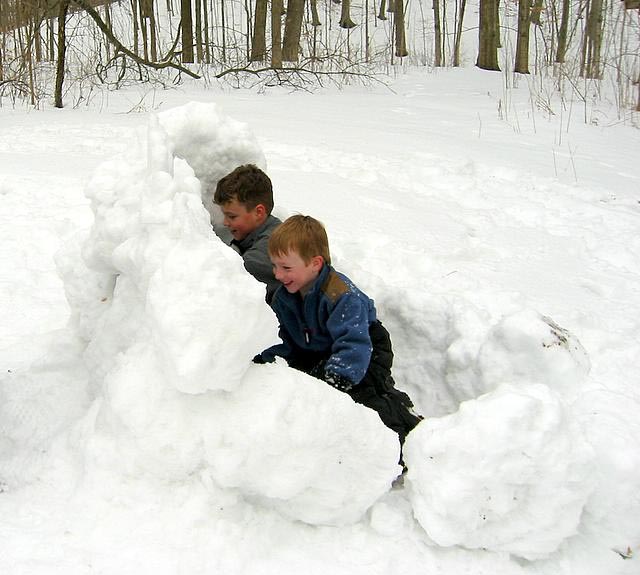
Today I hate snow and the thought of trying to drive around in it. When it snows in New York, people get behind the wheel and slip their brains into the glove compartment before pulling out to terrorize the rest of us. It was so different when I was a kid. The sight of fat, white snowflakes falling on a gray day meant we would soon be building snow forts, sledding down the hills, and having snowball fights while taking cover behind the parked cars. When my mother called me in for lunch, every crevice in my body was filled with melting snow. My lips were blue and I couldn't feel my toes as Mom peeled off the boots, snow pants, soaked gloves, and hat with the ear flaps. I was frozen to the bone and couldn't be happier.

Every once in a while, some unexpected cash would fall into my young life like manna from heaven, in the form of empty soda bottles that rewarded the bearer with a five-cent windfall. These were not easy to find, as people didn't disdain nickels in the Fifties; they took the bottles back themselves. If I came across a large Coke, Seven-Up or Hoffman soda bottle, it was off to the grocery store on Rockaway Avenue where the suspicious owner would always ask: "Did you buy that here". "Yes" I lied easily, desperately wanting that nickel. Then it was off to the candy store (after making a mental note to add the white lie to the "Venial Sin" category for that week's confession.

I was a good student at Our Lady of Lourdes school. I had a gift for memorizing things, which made hitting the books almost unnecessary. I tried to go to school prepared for that day's lessons, but sometimes I spent too much time reading comics or watching TV during the time I should have been doing homework. We all know that sinking feeling of walking into the classroom unprepared, and hoping the teacher doesn't call on us. When this happened to me, and it rarely did, I went on the offensive. When the teacher looked up for someone to answer a question, I would raise my hand and wave it around like mad. I developed this simple strategy after noticing that teachers generally did not call on kids with their hands up. It worked every time. Putting one over on the teacher shouldn't have made me happy, but it did.

Happiness came from trivial things like not getting hit when you knew you deserved it; having your sister take the fall for something you did; finding a great prize in your Cracker Jack box like a magnifying glass that you could turn into a solar death ray to incinerate ants. Seeing that kid in Dunkin Donuts today reminded me that joy is all around us if only we look for it through the eyes of a six-year old.


CLICK ON DATES AT TOP RIGHT TO SEE OTHER "SPALDEEN DREAMS" POSTS.

LOOKING FOR A WORTHY CHARITY? TRY THESE FOLKS:
Children's Craniofacial Association

Saturday, November 7, 2009

John Philip Sousa Comes to Brooklyn

Woody Allen used to tell a joke about being in a marching band when he was in school, and how it was the band's dream to stay together after school and play lounges. It reminded me, as unlikely as it may seem for a poor kid from Brooklyn, of my days as a member of the marching band in Our Lady of Lourdes grammar school back in the 1950s. Looking back, I can't figure out how a school that charged practically nothing for tuition could afford to support a full-blown marching band with instruments, uniforms, and a band manager. I imagine our parents must have kicked in something, but it couldn't have been much since most of them were struggling just to make ends meet.

The band was something to behold. We had a full horn section (bugles, trombones, French horns and tubas, flutes, glockenspiels (a kind of portable xylophone), snare drums, base drums, standard bearers, baton twirlers and a drum major. Our uniforms were blue satin blouses with white trim, white pants with a blue stripe, and white hats (called shakos I believe) with a gold crest. The band manager, whose name I can't recall, was a dapper looking man with a Boston-Blackie moustache. He was married to a stunning blonde who showed up at all practice sessions, which accounted for our band's nearly perfect attendance record.

The band members were drawn from the kids in school, from fifth graders on up. We were asked what instruments we wanted to play, and somehow they taught us enough music to get by. I played what looked like a trumpet, but was actually called a bugle. It had a single valve parallel to the horn bell, unlike the trumpet which has three valves on top. I can still recall the beautiful, shiny horn sitting in its case with the blue velvet lining. We were responsible for maintaining our instruments, and mine always gleamed. I liked the smell of the Noxon metal polish my mother kept in the house for cleaning our imitation silver dinner wear.

We would march in local parades, mostly in Brooklyn. Once in a while we would get a gig out of the area, and all pile in a bus to visit these exotic places. I think we may have also competed against other school bands but I'm fuzzy about that. We had a limited musical repertoire, but all marching band songs sound alike after the first few numbers. We practiced in the school gym, learning not only how to play our instruments, but also how to march in formation...a skill which came in handy later in life during my army days. I can recall playing our blockbuster, a song called "The Thunderer" by John Philip Sousa, a marching band classic. Here it is sounding a lot better than when we played it.
YouTube - The Thunderer March by John Philip Sousa


My music career was pretty remarkable when you think about it. Not so much for my playing ability, which was just fair, but the fact that at a time when money was scarce, my little school somehow found a way to sponsor such a grand enterprise. It is mainly owing to a Catholic school's ability (even to this day) to squeeze three nickles out of a dime, that inner-city kids like me even had a chance to join a marching band. I think to save money, the church paid off our band leader in "plenary indulgences". (For non-Catholics this was a kind of "get out of jail free" card for any stretch you had to do in Purgatory before ascending into Heaven.)


I was a lucky kid. There were many good men and women like our band manager, the teachers who ran our summer day camp, the coaches of all our athletic teams, and the neighborhood librarians who suggested books to read...these good people gave their time for little compensation so that kids could be off the streets and out of trouble. They challenged our bodies and our minds to make us better, and in retrospect, I am so grateful. If it was within my power, I would grant them ALL a plenary indulgence so they could take the Easy Pass lane straight to Heaven.


CLICK ON DATES AT TOP RIGHT TO SEE OTHER "SPALDEEN DREAMS" POSTS.

LOOKING FOR A WORTHY CHARITY? TRY THESE FOLKS:
Children's Craniofacial Association

Wednesday, October 21, 2009

Viva Italia

Reminiscing in this blog about growing up around my Italian family in Brooklyn sparked in me a powerful desire to visit the land of my ancestors. After much planning, and in the company of two special friends, Rich and Joann, my wife Jasmine and I touched down in Rome on October 6, 2009. It was a long, tiring flight since sleep is hard to come by when your knees are up against your chin. The FAA should pass a regulation requiring that, for flights over 4 hours, airlines must provide roomier, more comfortable seats. My ass was asleep until we got to Florence!

Rome was an incredible city, full of energy and bustle, much like New York. The traffic there makes New York look tame by comparison, as tiny cars and scooters zoom down main streets and narrow alleys, trusting to God to keep them from harm. One big difference from New York is that there is no horn honking. Romans simply point their vehicle where they want to go and rely on everyone (including pedestrians since there are relatively few traffic lights) to get out of their way. Rome is a marvel, where antiquities from the days of the Caesars stand, surrounded by a modern city. The Coliseum, the Roman Forum, St. Peter's, the Vatican all co-exist with apartment buildings, restaurants and commuter buses. A side trip to the Tivoli Gardens inspired awe as we tried to imagine how these architectural marvels were conceived, much less constructed over 500 years ago.


Florence is a city of the arts. The main Basilica di Santa Maria del Fiore with its gilded dome and magnificent interior; the Uffizi with gallery after gallery of Renaissance art and sculpture; and the Florence Academy of Art that houses Michaelangelo's David...all seen in too little time on our tour schedule to really appreciate them. We then made another side trip to the storybook town of San Gimignano, a walled, hilltop fortress near Sienna (pictured left) that guarded Florence from her enemies during the feudal wars of the 14th century; then on to the Chianti region in Tuscany where the hillsides are covered with vines, mainly the Sangiovese grapes used in the local wines. Lunch and wine tastings at two wineries made for a most pleasant afternoon.

Venice was our last and, for me, most surprising stop. I had anticipated the beauty and historic significance of Rome and Florence, and my expectations were well met, but I never imagined how beautiful the city of Venice would be. It was like living in a picture postcard, with breathtaking views everywhere one looked. The canals and bridges of the town were much like they must have been centuries ago. St. Mark's Square and church were exciting and alive with tourists, but somehow serene and religious at the same time. The Palazzo Ducale, the residence of the Doge of Venice, was a museum full of art, statuary, period furniture, and a wonderful collection of Medieval weapons.

Our tour guides in every city were knowledgeable and friendly. The residents of each city were warm and many spoke English. Europeans put Americans to shame when it comes to speaking more than one language. I know a little Italian, but each time I spoke to a local in Italian, they assumed I knew the language and their rapid replies left me in the dust. It is impossible to get a bad meal in Italy. We had a funny restaurant experience in Venice. After devouring a platter of Prosciutto and Salami, Joann asked the waiter what the dark red meat was. After checking with the kitchen, he came back and said: "Atsa horse!" "Excuse me" gasped Joann. The waiter repeated: "You know...cavallo...HORSE". I guess whatever nag comes in last at Venezia Downs that day turns up on the menu that night. (P.S. It was delicious.)

Italians are warm, welcoming people with great style. Even the seniors dress with flair and carry themselves with attitude. I felt a kinship with them and was sorry I didn't speak their language better than I did. This visit kind of closed the loop for me. Our grandparents on both sides left southern Italy in the early 1900's to make a better life for their families here in America. By going there and standing on Italian soil as their grandchildren, it felt like an affirmation of their pioneering spirit and work ethic. It was like saying: it's OK Italia, although Pasquale and Caterina Camardi, Nucenzo and Lucia Pantaleno, Vincenzo and Gelsomina Salamo, and Francisco and Matilda Corsano may have left you many years ago, they did well in America, and here are their grateful grandchildren to thank you for their proud Italian heritage. Viva Italia!


CLICK ON DATES AT TOP RIGHT TO SEE OTHER "SPALDEEN DREAMS" POSTS.

LOOKING FOR A WORTHY CHARITY? TRY THESE FOLKS:


Friday, September 25, 2009

The Child Within

When the weather permits, I try to walk outside in the morning, usually in Great Kills Park or along Staten Island's beautiful boardwalk at South Beach. As I walked the boardwalk the other day, I spotted a familiar structure across New York Bay, outlined against the purple-orange morning sky. It was the iconic Parachute Jump, symbol of Coney Island. As I walked, the weathered grey boards passing under my feet began to blur together, creating almost a waving motion, the way the TV screen used to get when a flashback to the past was about to occur. That's kind of what happens to me whenever I see the Parachute Jump...it's like a magic door to the past that peels away the years and turns me into a boy again.

I think we all have our lifelines back to the past, some object or event that connects us to the happy child we used to be. For some it's an old toy, maybe a favorite food or a special song that activates the time warp. For me, it's a place...Coney Island. I've written here before about Coney Island, and probably will again because it is that powerful a talisman for me. The memories that come flooding back when I lay eyes on the Parachute Jump are jumbled and random; they flash in my mind's eye for a moment and then they're gone, but for those brief seconds I am seeing the sights and hearing the sounds that so impressed me as a ten-year old. I am a skinny kid in a navy blue bathing suit, with a string I couldn't tie tight enough to keep the suit from sliding down my bony hips when I dove into the waves.


I am walking along the same type of weathered grey boards, only it's the Coney Island boardwalk under my feet, not South Beach. I see the young men placing protective arms around their giggling girl friends as the bored attendant in the dirty undershirt straps them into the swaying seats of the Parachute Jump ride; I hear the carny barkers pitching their well-rehearsed spiels to draw the suckers into the freak shows (bearded ladies, two-headed dogs, Siamese twins, the Wild Man of Borneo); the rigged boardwalk games with the giant stuffed toys that nobody ever won; people standing at the water fountains washing the beach sand from their sticky bodies before boarding the Franklin Avenue el train with the straw-covered seats that carried them back to the reality of whatever Brooklyn neighborhood they hailed from.

Further down the boardwalk is the entrance to Steeplechase Park, the laughter and screams from the people on the rides beckon to any soul with an ounce of fun in them; the handball courts near the Ravenhall Baths ruled by old Jewish men, their wrinkled skin tanned a nut-brown from hours spent in the sun taking money from guys who thought they could beat them because they were younger and faster...they left wiser and poorer; the man dressed in white walking on hot sand selling Humorette creamsicles out of a heavy box filled with dry ice; the mother yelling at the kid whose orange Humorette lay in the sand after melting off the stick in a 95-degree Coney Island sun; the lifeguards in their orange bathing suits and cream-coated noses trying to simultaneously scan the water for swimmers in danger while scanning the beach for girls to impress.

I'm wading into the water now, looking for a wave cresting high enough to dive into; I'm surrounded by fat women in bathing caps who waddled into the ocean for a "duck" as they called it when the heat on the beach became unbearable; I swim over to the colorful barrels strung together on thick manila ropes that were used to separate the beach into sections called "Bays"...the lower Bay numbers were assigned to Brighton Beach while the higher numbers meant you were in Coney Island waters. I dive under the water doing my famous hand-stand, skinny legs sticking straight up out of the water, hoping someone, anyone, will notice my aquatic acrobatics; I pull up my sagging bathing suit and head for our blanket where I know that incredible-tasting pepper and egg sandwiches and a jug of watery Kool Aid are waiting.

If you're reading this and thinking: "That's it...that's the magic place you time-travel to when you want to feel young again?", I can only say I feel sorry for you for not having known Coney Island in its heyday. For anyone who does remember, I hope the journey back was a pleasant one for you. It's important that we stay in touch with the happy child that still lives deep within us. The connection grows more tenuous as we get older, but don't ever let go completely. When life's troubles press in on you, spend a few minutes with that exuberant child who ran everywhere, laughed at everything, and worried about nothing. You'll be surprised how differently you look at life, at least for a little while.

CLICK ON DATES AT TOP RIGHT TO SEE OTHER “SPALDEEN DREAMS” POSTS. ALSO, READ MY OTHER BLOG: BRAINDROPS


LOOKING FOR A WORTHY CHARITY? TRY THESE FOLKS:
Children's Craniofacial Association

Monday, September 21, 2009

The Young Man and the Sea

I have written before about my Uncle Joe, who not only introduced me to fishing, but who had the dubious distinction of being the only man I ever knew who put an egg in his morning beer. (View "Buddy and May"). Uncle Joe loved to fish, not because he was a great sportsman, but just to have an excuse to get away from his wife May. Anytime I saw them together, she was nagging him unmercifully. Not only had the romance gone out of their marriage, but on any given day, murder was a real possibility. I would love to say that underneath all the bickering they really cared for each other, but honestly, the animosity was real.

Uncle Joe would always take me to Broad Channel in the Rockaways. He knew the grizzled old man who rented the rowboats, and they commiserated about how their wives were driving them crazy. I used this time to transfer the fishing gear from Uncle Joe's two-tone '54 Chevy into the boat. Rods, reels, bushels, crab nets, and of course, a cooler filled with cans of Ballantine Beer and Cokes in the bottle. Uncle Joe would walk out of the boat shack carrying the bait fish we would be using for the day. "Let's go Junior" he would say. We rarely spoke except maybe to comment on the fishing. Uncle Joe chain-smoked Camel after Camel, lighting one with the stub of its predecessor. Like my Dad, he died of lung cancer, a smoker to the end.

When Uncle Joe's health began to fail, I was handed off to cousin Pete where my fishing education continued. Pete lived upstairs from us, and out of all my cousins, I liked him best. He was an ex-sailor and always seemed to be in a good mood. Pete took me to Sheepshead Bay in Brooklyn where the big charter boats left for a day's fishing. We'd pack a lunch and leave very early in the morning. Typically the boats left the dock at 7 am and came in at 11 am or 3 pm depending on whether you paid for a half-day or a full-day's fishing. They supplied tackle if you needed it, but we usually brought our own.

The people on these charter boats were very companionable...young guys in groups interested more in drinking beer than fishing; veterans who fished almost every day and sold their catch to the restauranteurs who were waiting at the dock on our return; fathers, sons, uncles, grandfathers, even an occasional girl who had to turn a deaf ear to the colorful language that flew whenever a fish got away. It would take an hour or so to reach the fishing grounds, during which time most of us slept. We fished for flounder, fluke, porgies, and when I got older, fighting bluefish. My father hated fishing, so I was lucky enough to have Uncle Joe and cousin Pete to fill in.

Some years ago we visited cousin Pete, his wife Leah, and their daughter Maryellen and her family in Tempe, Arizona where they moved in the early 1960s. Shortly after the move, Pete's son Peter was killed in a motorcycle accident, a tragedy Pete never got over. It was a great visit, spent reminiscing about Pete's days as a pizza chef in Sportsman's Cafe on Fulton Street. Sadly, Pete was suffering from the early stages of Alzheimer's at the time, but as is typical of people with this disease, remembered more about the past than the present. They didn't get to see much of the family after moving west, and I know our trip meant a lot to him. I didn't get to tell him how much the time we spent together fishing meant to me, but somehow, I hope he knew.

CLICK ON DATES AT TOP RIGHT TO SEE OTHER "SPALDEEN DREAMS" POSTS.

LOOKING FOR A WORTHY CHARITY? TRY THESE FOLKS:Children's Craniofacial Association

Tuesday, September 15, 2009

September Song

I think it's inevitable that as we get older, we think wistfully about the days when we were young and strong, full of dreams and unrealized potential. One of the reasons I started writing this blog is to have an excuse to time travel back to those carefree days. and to write a few words about the people, places and events that made me who I am. Funny what different insights are gained looking at life in the rear view mirror. You don't attach much significance to the process of personal development as you're living it, but in retrospect, you gain a much clearer understanding of the forces that helped shape that development.

Probably for most of us, our parents played the major role in the formation of our character. We took for granted the fact that Mom (View "Saint Frances") and Dad (View "Tony Boots") would always be there to solve our problems, give us advice, set the boundaries, and let us know when we had stepped over the line. For a lot of kids, especially today with the traditional family unit changing dramatically, this is not the case. I can't imagine what it's like going through life without knowing that no matter what happened to me, a safe, nurturing, home base would always be waiting. I never fully appreciated the sacrifices my mother and father made for me, by way of repayment, can only try as a parent to live up to the standard they set.

Teachers are another force in our lives that inspire us to learn and grow. I've written before of the influence two particular teachers had in my life, in grammar school, Brother Jude, (View "School Days, Part 2") and in high school, Patricia Hornberger) View "Tech Alma Mater, Molder of Men"). It's only later in life that you understand how much poorer you would be without the wisdom gained from dedicated teachers who dragged you, kicking and screaming, out of the darkness of ignorance into the bright light of learning. You didn't know it back then, but they presented you with a precious gift that would never get old or wear out. May God bless all the underpaid, overworked teachers of the world.

Friends are an integral part of who we are. I was blessed with a bounty of friendships, some of which I enjoy to this day. I don't mean to make unfair comparisons, but friendships among children today seem like such structured affairs. Parents make "play dates" for kids, drive them everywhere they go, and hover over them as if there was a worldwide conspiracy to harm their children. When I grew up, friendships were free and exuberant. Your loyalty to your friends was unconditional...you might wrestle with them over some taunting remark, but if anyone else came after them, you had their back. To Rich, Phil, Vinny, Johnny, Tommy, Lefty and Joe, thanks for being my friend.

As I grew older and began thinking about getting married (in my neighborhood, if you were over 25 and unmarried, people were already starting to look at you funny) I dated a number of girls. They were all nice, but they mainly taught me what I wasn't looking for in a wife. Thanks to them, when Jasmine came along, I knew that she exactly fit the bill. It took me a while to pull the trigger, but after 43 years, I think it's safe to say that I made the right choice. Her quiet goodness and kind ways have softened some of my rougher edges. To paraphrase the words of Jack Nicholson to Helen Hunt in that gem of a movie, "As Good As It Gets", she makes me want to be a better man.

There were many others who helped us along the road of life...the grandparents, aunts, uncles, and cousins who made up our extended family and who all lived within hollering distance in our old Brooklyn neighborhood; the doctors who made house calls and didn't ask what insurance you had; the neighbors who watched each other's kids and served as surrogate parents from their vantage point on the stoop; the cop on the beat who gave you a swat across your rear if you needed it, but never told your parents; and the merchants who provided the necessities of daily life and would quietly let overdue bills slip until you got back on your feet....these are the people that made me who I am. If you don't like the results, take it up with them!


George Bernard Shaw wrote that "Youth is wasted on the young", but I disagree. I relished my youth and wouldn't trade a single day on those raucous, sun-splashed streets of East New York. The nice thing is, while I still have a few functioning brain cells left, I can go back whenever I want.


CLICK ON DATES AT TOP RIGHT TO SEE OTHER “SPALDEEN DREAMS” POSTS. ALSO, READ MY OTHER BLOG: BRAINDROPS

LOOKING FOR A WORTHY CHARITY? TRY THESE FOLKS: Children's Craniofacial Association

Monday, September 14, 2009

Extra, Extra, Read All About It!

Last week when Senator Ted Kennedy died, I overheard a thirty-something guy say to his friend: "I didn't know about the girl who drowned in his car". It's funny, events we "seasoned citizens" remember like they happened yesterday, events that changed our lives and shaped the times in which we lived, are not at all familiar to many post-Baby Boomers. I started thinking about some of the headline stories from the fifties and sixties that we read about in the Daily News, the Journal American, and the New York Times (before it became a liberal rag) while growing up on the streets of Brooklyn.

In the summer of 1957, the city of Little Rock, Arkansas, made plans to desegregate its public schools. On the night before school was to start, Arkansas Governor Orval Faubus called out the state's National Guard to surround Little Rock Central High School and prevent any black students from entering. On September 25, 1957, the nine black students entered the school under the protection of 1,000 members of the 101st Airborne Division of the United States Army. Today, when I see newsreel footage of those poor, frightened children, I want to cry thinking of what we put them through.

In the years following the end of World War II, fear of Communism grew.In the midst of this fear came Senator Joseph R. McCarthy. In 1950, this senator from Wisconsin made a speech in Wheeling, West Virginia, where he claimed to have a list of 205 people in the state department who were members of the Communist party. It's scary looking back to see how far this lunatic was able to fool the American people before he was stopped cold by a brilliant and gutsy lawyer named Joseph Welch. In our zeal for vigilance, we allowed ourselves to be railroaded by a fear mongering demigod who damaged many reputations before common sense again prevailed.

In 1960 John F. Kennedy was the youngest man ever to be elected president of the United States, narrowly beating Republican Vice President Richard Nixon. Kennedy was probably the first and last Democrat I voted for; chalk it up to my youth. On November 22, 1963 in Dallas, Texas, Kennedy was assassinated by Lee Harvey Oswald. The country was in shock. We stayed glued to our TV sets (much like on 9/11/01) and listened to newscasters tell this unbelievable story. When Oswald was killed by nightclub owner Jack Ruby a few days later, the conspiracy theorists got busy and remain so to this day. Camelot was in ashes, and Kennedy was practically canonized. His halo has been tarnished a little since.

On a recent episode of Mad Men, they reprised the events surrounding what came to be known as the Cuban Missile Crisis. In October 1962, President John Kennedy went toe-to-toe with Russian premier Nikita Krushchev over offensive missile silos that Russia was constructing in Cuba, just 90 miles from the United States. Thankfully, Krushchev blinked and the crisis was over, but not before it scared the bejesus out of us. My wife remembered the event better than I, and how frightened Catholics were lining up for Confession in the belief we might all be blown to kingdom come like some prequel to the movie Dr. Strangelove. That was, as far as the government tells us the truth, the closest we ever came to the "Big One".

In late 1969 a three-day music festival was held near the town of Bethel, New York. Woodstock is widely regarded as one of the greatest and most pivotal moments in popular music history. It may have been that, but in the opinion of this old guy, it was the beginning of the decline in American morals and values that continues to this day. Woodstock was the opening salvo for drugs, premarital sex and rebellion against any and all authority. I know, I know, we were considered by younger people to be living in "repressive" times, but you know what...that was just their bullshit excuse for not wanting to get a job and take on any responsibility. Don't fight me on this one because you'll be wrong.

CLICK ON DATES AT TOP RIGHT TO SEE OTHER “SPALDEEN DREAMS” POSTS. ALSO, READ MY OTHER BLOG:BRAINDROPS

LOOKING FOR A WORTHY CHARITY? TRY THESE FOLKS:Children's Craniofacial Association

Wednesday, September 9, 2009

There Goes the Neighborhood

In the 1950s, the East New York section of Brooklyn was populated largely by white descendants of immigrants from Ireland, Italy and Germany, with a few Slavic families thrown in. It was bordered by neighborhoods like Brownsville and Bedford Stuyvesant, which were largely "colored", the term used back then for African-Americans. Blacks and whites kept pretty much to themselves for many years with only scattered incidents of violence. In the early sixties, this began to change. The impetus for the change, in my opinion, was the emergence of street gangs.

The 1960s were a turbulent time. Black and Latino minorities, unhappy with the slow pace of civil rights and the lack of jobs, banded together, not just in Brooklyn, but across the country, to flex their muscles and push back against some of the injustices that prevailed in that time. In our neighborhood, white gangs formed to defend their turf. I remember names like the Javelins, the Bishops, and the one that ruled in our neighborhood, the Baldies. These gangs began invading each other's territories and inter-racial gang fights became common.

I have two personal incidents to contribute. The first came when a local punk named Louie bullied my friend Vinny, a timid soul who bothered no one. I made it clear to Louie that if he didn't leave Vinny alone, I would intervene. Little did I know that Louie's bravado stemmed from the fact that his older (and bigger) brother was a member of the Baldies. One day Louie called me over to a stoop on Fulton Street, whereupon he opened the hallway door to reveal his brother and two other knuckle-dragging Baldies. They explained to me, punctuated with a couple of taps on my head with a stickball bat, that Louie was "protected". I readily agreed.

My second experience came at the hands of a black gang. We had just left the Pitkin Theater, myself and three other friends, when we were set upon by a group of black gang members seeking to avenge an earlier attack on one of their own. We had a running fist fight with them all the way to Rockaway Avenue, where we made our escape, bloodied but not bowed. When we came into the candy store to clean up, a couple of older guys were there. After hearing our story, they rounded up a posse complete with chains and baseball bats, and told us to get into their cars. They were headed for Pitkin Avenue and sweet revenge. I was scared to death, and to this day I thank God we never found any of our attackers.

Before the gang wars, race relations on our block were kind of live and let live. We had black families on Somers Street, but didn't mix much with them except, interestingly enough, when it came time to play baseball or stickball. Prejudices were suspended for these games, and color didn't matter when we chose up sides. If you could hit and field, you were picked, period. We had a black kid named Roscoe Gregory living down the block near Stone Avenue. He was small, but one of the best ball players I ever saw...he always got chosen first. When the game ended, blacks and whites went our separate ways.

In time, more and more black families moved into the neighborhood. White families became frightened and the exodus to the suburbs began. I don't have any answers to the race relations problems we continue to experience in this country. There are polarizing forces on both sides that make racial harmony an elusive goal indeed. Mistrust, even hatred, permeate the dialogue between the races and who knows if it will ever end. For my part, I would love to know if Roscoe Gregory is still around so I can sit down over a beer and get to know him a little better. It's a start.

CLICK ON DATES AT TOP RIGHT TO SEE OTHER “SPALDEEN DREAMS” POSTS. ALSO, READ MY OTHER BLOG: BRAINDROPS

LOOKING FOR A WORTHY CHARITY? TRY THESE FOLKS:Children's Craniofacial Association

Thursday, September 3, 2009

Hot Fun in the Summertime - Part 3


The things we did to amuse ourselves seemed to come in seasons. Fall might see us playing with yo-yos and doing tricks like rock the cradle or walk the dog; or maybe trading ten-cent comics like Superman, Lash Larue, or Little Lulu; Winter meant sledding down the hill in the vacant lot, or building snow forts and having snowball wars; Spring would bring on baseball of course, but less well-known pastimes like making scooters out of wooden crates and old roller skates, or fashioning carpet guns powered by rubber bands that fired deadly squares of cut-up linoleum; Summer was the best season of all because it opened up so many possibilities for strong young bodies with boundless energy!

There was swimming at the beach (View Coney Island - Land of Enchantment) or Cypress Pool ( View Rites of Passage); going to the playground (View Band Aid Park); family picnics (View That Great Picnic Favorite: Barbecued Lasagna); Day Camp at P.S. 73 (View Summer in the City); and so many other games devised by clever street kids without much money. At night the "ride trucks" would come around...these were kiddy rides like the Whip, the Moonship and a tiny Ferris Wheel. For a nickel you got a cheap thrill delivered right to your door. We played Hide and Seek, Ring-a-leevio, Kick the Can, or Johnny-on-the-Pony for hours out under the streetlights.

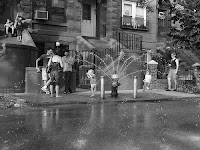
On hot days when we couldn't get to the beach, there was always the Johnny Pump (fire-hydrant to non-Brooklynites). One of the kids would borrow his father's wrench and in seconds we were all in the street yelling and screaming in our bathing suits. Soon someone would find a tin can, remove the lids on both ends, and use the metal cylinder as a water cannon, directing the stream of water gushing out of the hydrant. As cars passed by we would move to the sidewalk. Some drivers passed through slowly motioning us to direct the water stream over their cars for a free wash. Neighborhood drivers knew enough to close their windows all the way for this procedure; outsiders who didn't know better paid the price.

We were on the street all day from 8am to dinner time, sometimes not even going home for lunch. If we got hungry we would go into Bilello's Bakery on Rockaway Avenue to buy a loaf of hot Italian bread for 10 cents, or if we were flush with cash, the deli would sell you a baloney hero for a quarter. For quick snacks there was the old man selling Mom's Knishes, the pretzel cart, or the chestnut cart. Dessert was ices at Roma Pastry on Fulton Street, a fudgesicle or Mello-Roll, shaved ices flavored with syrups, or if you were desperately broke, the guy delivering ice to the people with no refrigerators would take his ice pick and chop a hunk of ice off the big block for you to suck on.

To beat the heat, we'd sit through a double feature at the air-conditioned Colonial Theater on Broadway ( View Saturday at the Movies). It was typical of theaters of the day with a big screen, plush seats, red carpets down the aisles, a balcony where many a first kiss was stolen, and women ushers called "Matrons" whose main qualification for the job was that they be at least 75 years old. We were relegated to the children's section of the theater since we were under 16 years old. We got our revenge by yelling out things during the show, especially during the romance scenes that just begged for a mocking commentary. When television came on strong in the early sixties, movie theaters struggled. They gave out cheap china on "dish night", and even raffled off prizes; (remember when Ralph Kramden and Ed Norton won a TV in a movie raffle and had to share it?)

As the end of August neared, it seemed to me that my white shirt and blue tie school uniform hanging ominously in the closet was calling out to me. The days were getting shorter and the nights cooler...how long before the men in black robes would once again be standing before me trying to teach me how a "gerund" was used in a sentence, or where Dutch New Guinea was located. Those summers are so far back in time, and yet, (if I can forget for a moment about the aches when I get up in the morning, and the fact that I have once again misplaced by car keys,) I can become that ten-year old boy again in my mind's eye. Thin as a rail, eating like there was no tomorrow, running everywhere I went, and NEVER turning away from a pal's taunting "I dare you".

Today, for me, hot fun in the summertime is finding a coupon for the "buy one, get one free" early bird dinner. Now where did I put my white belt and shoes?!

CLICK ON DATES AT TOP RIGHT TO SEE OTHER “SPALDEEN DREAMS” POSTS. ALSO, READ MY OTHER BLOG:BRAINDROPS.

LOOKING FOR A WORTHY CHARITY? TRY THESE FOLKS:Children's Craniofacial Association