Tuesday, November 23, 2010

A Special Day Remembered

I must have been around 10 years old when my Mom took me to the American Museum of Natural History. I don't recall if my sister was with us, and my younger brother had not yet made his appearance in the world. We didn't often get to go to places like this. My folks never owned a car so transportation was limited to subways and buses. I remember being impressed by the exterior of the Museum; I still am to this day. Shortly after its founding in 1869 by Albert Smith Bickmore, the Museum quickly outgrew its original location in the Central Park Arsenal and secured Manhattan Square, a block of land across the street from Central Park, between West 77th and 81st Streets. On June 2, 1874 the cornerstone for the Museum’s first building at 77th Street was laid by U.S. President Ulysses S. Grant. On December 22, 1877 the first building opened with U.S. President Rutherford B. Hayes presiding at a public ceremony.

Not to be outdone by its beautiful exterior, the exhibits and collections housed inside the Museum deliver everything a 10-year old boy could wish for. At the time, visitors were blown away as soon as they entered the lobby by a giant skeleton of Tyrannosaurus Rex, one of the largest dinosaurs that ever walked the earth. Most of the bones were real... fossilized Tyrannosaurus bones from two specimens discovered in Montana by Museum paleontologist Barnum Brown in 1902 and 1908. (I think it still stands there today, but posed differently now that we know more about how these creatures stood upright.) If I saw nothing else that day, the T-Rex alone would have justified the hour spent on the A train. My imagination was on fire five minutes into our visit.

I also vividly recall the dioramas set up in the Museum to entertain and enlighten as you walked the corridors on the 8 floors of the building. The Hall of Mammals with wild animals from all over the world in realistic poses and habitats; early man around the campfire; scenes of everyday life of Native Americans, Eskimos, Africans, Asians; the Hall of Ocean Life that brought the sea and all its creatures indoors; the Hall of North American Forests featuring a cross section of a giant sequoia tree over 1300 years old, showing historic events that were taking place as each ring on the tree was forming; it was really too much for a 10-year old to absorb. My poor mother was probably exhausted as I dragged her from exhibit to exhibit, yelling excitedly as we rounded each corner.


And then there was the Hayden Planetarium that opened in 1935. We walked into the dark theater and took our seats, not really knowing what to expect. As the lights went completely down and the show started, I became mesmerized. Remember, this was 1952, before the advent of space exploration and travel. The planets were flat images in a text book to most people, but the Planetarium show about the origins of the galaxy and planet earth changed all that. It was almost magical to me seeing the images of Mars, Saturn and shooting stars projected overhead in the night sky. I'd be willing to bet that the experience of seeing that show inspired more than one kid to pursue a career in science. I didn't want the show or the day to end, but it did. Mom took me to the snack bar for something to eat before we got back on the subway for the long trip back to Rockaway Avenue in Brooklyn.

I'm not sure what prompted Mom to make that trip with me in 1952. We didn't do many trips like that... maybe she thought I needed to have a little culture drummed into my barbarian head. I like to think she enjoyed herself, and that some of the things that fascinated me were of interest to her too. As kids, when we are doing things with our parents, like our family pilgrimage to Radio City Music Hall (
View Radio City Music Hall), or my father taking me to Yankee Stadium (View Where Have You Gone, Joe DiMaggio), we tend to take them for granted. It's only when our parents are gone and we think back on those special moments we shared, that we appreciate what they did for us. Thanks, Tony and Fran, for making time for me.


CLICK ON DATES AT TOP RIGHT TO SEE OTHER “SPALDEEN DREAMS” POSTS. ALSO, READ MY OTHER BLOG: BRAINDROPS

LOOKING FOR A WORTHY CHARITY? TRY THESE FOLKS: Children's Craniofacial Association


Tuesday, November 9, 2010

Little GTO

This past Saturday we were headed south on the New Jersey Turnpike to Philadelphia . We passed a long line of vintage Pontiacs... Bonnevilles, Catalinas, GTOs and Gran Prixs, all driving in a caravan probably to some antique car show where collectors gather to share their enthusiasm for one of America's iconic automobile brands. They were mostly older guys like me, trying to hang on a little longer to their youth. In the mid-fifties General Motors dominated the automotive world. GM was such an economic force that it's Chairman, Charles Wilson, after being appointed Eisenhower's Secretary of Defense, is reported to have said: "What's good for General Motors is good for the country."

In the 1950s, GM was the largest corporation in the Unites States. A job there was pretty much cradle to grave security, especially after the rise of the United Auto Workers Union under such dynamic leaders like Walter Reuther. Gradually, the cost of paying union members, including extremely generous benefits, began taking its toll. Moreover, ridiculous union work rules cut into the productivity of the American worker, adding to GM's burden. Finally, the bizarre Detroit manufacturing philosophy of "planned obsolescence", the process of a product becoming obsolete or non-functional after a certain period or amount of use in a way that is planned or designed by the manufacturer, was the last straw and the beginning of the end for GM. Looming on the horizon, ready to change the auto industry in ways GM never imagined, was an unknown company from the Land of the Rising Sun.

Around 1959, Nissan Motors began selling its small Datsun sedans. Consumers laughed. Management at GM and other major US automakers, in their supreme arrogance, scoffed at the Japanese cars. This was America, and everyone knew that bigger was better, at least that's what they bet the ranch on. They lost. The steady rise in gasoline prices made the economical Japanese imports more desirable than their gas-guzzling US counterparts for many Americans. While the big three Detroit automakers continued cranking out big cars loaded with bells and whistles, Nissan, and later Honda, Toyota and Volkswagen, slipped in under the radar and stole their market with compact, reliable little cars. The rest of the story you know.

In the fifties and sixties, each GM brand had its own strong identity. Every boy on my Brooklyn block could identify a GM car a block away, and many could recite the model and year as well. By the 80s, GM's various brands all started to look alike - it was hard to tell an Olds from a Buick or Pontiac - no more 'Rocket 88' swoopy styling - just another blandly engineered' GM product. Around the year 2000, GM abandoned its Oldsmobile brand. This past May the last Pontiac rolled off the assembly line, leaving general Motors just three of its iconic brands, Chevy, Buick and Cadillac. In 2008 GM received billions in bailout money from the government, with up to an additional $45 billion more in future tax credits. In 50 years the once largest corporation in the United States was on its knees, victimized by clueless management, greedy unions and skyrocketing gas prices.


As we drove by those classic Pontiac cars, what should have been a celebration of American automotive history became in my mind more like a funeral procession for a lost American industry. GM is finally making the kind of cars that Americans want, but we are now playing catch-up in a business we once ruled.


CLICK ON DATES AT TOP RIGHT TO SEE OTHER “SPALDEEN DREAMS” POSTS. ALSO, READ MY OTHER BLOG: BRAINDROPS


LOOKING FOR A WORTHY CHARITY? TRY THESE FOLKS: Children's Craniofacial Association


Monday, November 1, 2010

The Time Travelers

This weekend we took a trip in a time machine. Actually, we visited my son and daughter-in-law at their new digs in Philadelphia to help them paint and clean-up. The house is a vertical brownstone-style structure with four levels. It sits on Lombard Street in the beautiful Washington Square section of town, and reminds me so much of my old neighborhood in Brooklyn. The row houses are very similar to the ones I grew up in, maybe a little fancier.

What I love about the area is that it is a real neighborhood. Residential homes are mixed in with restaurants, stores and parks. People actually walk from place to place. It almost has a European feel with cobblestone streets, flower boxes in the windows, and beautiful ironwork gates and doors. The population looks like a mix of old timers who were born in and will die in the neighborhood, business people who want to live near where they work, tourists who come to see the Liberty Bell, young Yuppie couples with little Yuppie kids, and ethnic folk of all kinds living together. Too many neighborhoods like this one fell to urban blight, but you get the feeling that won't happen here.

A short walk away is the Italian market where familiar foods can be found fresh. These are not the mega stores that you need a map to get around in, but mom and pop operations that have been in the same families for generations. Men sit outside on sidewalks or under trees playing cards, drinking coffee and solving the problems of the world, while never missing a pretty girl that may walk by. We had dinner at a BYO trattoria called Giorgio's on Pine (located on Pine Street). The place was cozy, the food great and the owner very solicitous.

The local church is really two churches that combine to serve the parish, St. Paul's, and around the corner, St. Mary Magdalen de Pazzi, the oldest Catholic-Italian church in America. St. Paul's was also built with contributions primarily from Italian parishioners, as the benefactor plaque in the lobby shows...mostly last names ending in vowels. The interior of the church was filled with statues, many with Italian connections like St. Rocco who, though born in France, spent some years in Italy. The statue of Saint Rocco, patron saint of plague victims, is considered unique among theologians because of his pose; it depicts him with his left hand pointing to an open sore on his left leg. Few images of saints expose any afflictions or handicaps.

Real neighborhoods are hard to find any more. So many of us live in the suburbs where neighbors don't know one another, and people who walk the streets are eyed suspiciously from behind closed curtains. I remember walking down my block and knowing at least two-thirds of the people by name, and they me. People swept and hosed off their sidewalks, and would nod hello to anyone who passed. Sitting on stoops and trading gossip was raised to an art form. The local barber knew how you wanted your hair cut, the butcher would save you a nice cut of meat he knew you liked, and the bartender would be readying your drink before your behind hit the bar stool.

If you miss this kind of neighborhood, take a time machine trip to South Philly and revel in it like I did.


CLICK ON DATES AT TOP RIGHT TO SEE OTHER “SPALDEEN DREAMS” POSTS. ALSO, READ MY OTHER BLOG: BRAINDROPS


LOOKING FOR A WORTHY CHARITY? TRY THESE FOLKS: Children's Craniofacial Association


Sunday, October 24, 2010

Neighborhood Character: Brother Dominic

Schooldays form a large part of our childhood. Memories of those years come easily, maybe because that part of my brain is somehow compartmentalized and uncluttered with all that's happened in my life since. I've written here before about my grammar school, Our Lady of Lourdes, in the Bushwick section of Brooklyn. They don't call them grammar schools anymore because they stopped teaching grammar many years ago. That's evident in the speech and writing of our citizens, even "educated" ones. But I digress.


What makes those days so memorable is that as children, we are sent to school like blank pages, ready to be filled up with the academic knowledge that will help us get along in life. This knowledge is imparted by our teachers who become like surrogate parents, each taking part in our development for one year and then handing us off to the next higher grade where the process continues. Most of us can point with gratitude to those teachers who had the most positive influence on our young lives. I had two such teachers that I remember very fondly, Brother Jude, (View "School Days, Part 2") and Patricia Hornberger) View "Tech Alma Mater, Molder of Men"). Unfortunately, we shudder as we also recall the bad teachers. Brother Dominic was one.


Our Lady of Lourdes employed women teachers for grades 1 to 4; there was no Kindergarten in the dark ages. For grades 5-8 the girls were taught by nuns, the Sisters of St. Joseph, and the boys by Franciscan Brothers. In the days when physical discipline was a reality in the classroom, teachers ruled mostly by fear. This sounds harsh, but in reality it eliminated a lot of the nonsense distractions teachers have to cope with today, and if you toed the line, you were usually OK. The nuns and brothers established the rules early on and you obeyed them, end of story. If you strayed, you paid.


Brother Dominic was the most feared disciplinarian in the school. His biggest regret in life was that he had missed out on the Spanish Inquisition. Instead, he took out his frustrations on the thirteen-year old boys placed in his care. Catholicism is a basically good religion that sometimes attracts bad people like pedophile priests. Brother Dominic was bad. Short but muscular, bald and humorless, he patrolled the hallways like a malevolent force, and as he was the 8th grade teacher, you knew you had to pass through his class before you graduated.


I remember older boys moving up from Brother Jude's 7th grade class, and how they changed when they met Brother Dominic in 8th grade. A shadow passed across their normally cheerful countenances as they prepared to spend a long year with the Angel of Death. Brother Dominic not only enjoyed physically abusing boys, but humiliating them as well. Maybe he had a Napoleonic complex and felt he had to live up to his reputation. There were also rumors of "inappropriate touching", but they were never addressed publicly. We all knew he was waiting for us like a dark cloud we had to pass through. "I'll get you my pretty, and your little dog too!"


In my years at Lourdes I found there were brothers who looked fierce on the outside but always had some redeeming quality that made them approachable. Brother Dominic was pure evil. I know some day he will have to answer to a higher power for all the boys he brutalized. As I finished the 7th grade, and was steeling myself for the fate that awaited me, the sun suddenly broke through the clouds. The hated Brother Dominic was leaving the school (maybe there was something to those inappropriate touching allegations after all) and my man Brother Jude was assigned to the 8th grade. In life we occasionally get unexpected breaks thrown our way. We may not deserve them but by the grace of God they come anyway. Thank you Lord for delivering me from clutches of Brother Dominic.

CLICK ON DATES AT TOP RIGHT TO SEE OTHER “SPALDEEN DREAMS” POSTS. ALSO, READ MY OTHER BLOG: BRAINDROPS

LOOKING FOR A WORTHY CHARITY? TRY THESE FOLKS: Children's Craniofacial Association


Friday, October 15, 2010

Bullies

It's alarming to see how far bullying has come since the 1950s. The recent stories of teens driven to suicide because thoughtless kids posted stuff about them on Facebook or Twitter are tragic beyond words. We were not exempt from the taunts and miseries that bullies inflict on their victims, but it's different today. With electronic communication and social networking sites, the bullies have an easier time spreading their poison, and a ready audience of kids with low self-esteem looking to find someone less popular than themselves to laugh at.

Bullies have been around forever. They try to compensate for whatever is lacking in their own character by physically and verbally abusing others. When I was growing up there were bullies who picked on weaker kids not inclined to stand up to them. Every block and schoolroom had one...they would find victims to taunt or beat up for no reason other than they had a funny name or wore thick glasses. I think for boys, bullying became a rite of passage. We would be bullied by older boys, and sometimes to save face, we would bully younger kids in retaliation. I remember two childhood experiences, one when I was the bullied and another when I was the bullier.

I tangled with a kid from Fulton Street named Louie. His brother was reputedly in a local gang called the Baldies, and Louie hid behind his brother's reputation to pick fights with everybody. One day he went after my friend Vinnie and I stepped in and beat the crap out of him. He snivelled that he would tell his brother, and foolishly I told him to go ahead. Probably not my best idea ever. One day Louie accosted me, only he wasn't alone. His brother and a few Neanderthals were with him, and they walked me around the corner to a recessed stoop near Roma's Pastry store. "Are you ever going to hit my brother again?" came the question from brother Baldie. Pop! "Do you know what I'll do to you if you ever do?" Pop! After each question brother Baldie put to me, snivelling Louie rapped me on the head with a stickball bat! Badly outnumbered, I endured the beating in silence. I was ashamed, but I thought better a live coward than a dead hero.

My turn as a bully came when we took advantage of a mentally disturbed young man we called "Eddie Goose". Although in his early twenties, Eddie hung around the edges of our crowd because he couldn't function as an adult. We used him to run all our dirty errands like climbing on rooftops to retrieve lost balls and stealing fruit from Steve the pushcart guy. Eddie gamely endured our taunts and insults as long as we let him into a game once in a while. Despite his sweet nature, one day one of the guys pushed too hard. Being not only older than us, but powerfully built, Eddie had some type of seizure, picked the guy up over his head and hurled him into the bushes in front of my house. That day we saw a side of Eddie that scared the hell out of us, and although he was immediately contrite and afraid he had hurt his tormentor, we treated him a whole lot better after that. Unlike most of the memories in this blog, this one pains me because of the way I acted toward a sweet, harmless man.

One of my favorite scenes from the great holiday movie Christmas Story is when little Ralphie, frustrated to tears after years of torment at the hands of the neighborhood bully Scut Farkas, just snaps and pounds him to a pulp amid the cheers of his friends and fellow victims. Almost any Hollywood movie where the little guy stands up to the bully and wins is guaranteed box office. Trouble is life is not always black and white and sometimes it's hard to tell who the bullies are. I think there's a little bully in all of us trying to get out. I hope the schools and parents can do something about this problem. With video cams, texting and the Internet, today's cyber-bullies don't even have to risk a punch in the nose to do their dirty work.


CLICK ON DATES AT TOP RIGHT TO SEE OTHER “SPALDEEN DREAMS” POSTS. ALSO, READ MY OTHER BLOG: BRAINDROPS


LOOKING FOR A WORTHY CHARITY? TRY THESE FOLKS: Children's Craniofacial Association

Tuesday, September 28, 2010

Italians and Religion

There was a great scene at the end of Godfather I where the director cut back and forth between Michael Corleone standing up as Godfather for his sister's child in Baptism in the sanctuary of a Catholic Church, while the soldiers in his Mafia family systematically and ruthlessly executed his father's enemies. The scene was a kind of metaphor for the ambivalent relationship between Italians and their religion. Historically, Italians have always had a strong connection to Catholicism, after all, their CEO is headquartered in Rome. Even today, approximately 90% of the population of Italy identifies itself as Catholic, although of that number, only about 1/3 are actually practicing Catholics.

When I grew up, being Italian was synonymous with being Catholic. My parents were Catholic and sent me to Catholic grammar school. The chances of me turning to any other religion were about the same as Elton John going out for the Rugby team. Every Sunday, rain or shine, I was at the 9:00 o'clock Mass with the rest of my class. At Our Lady of Lourdes, there were pews set aside for the school children, and you had better be in your appointed place or face an inquisition on Monday morning. I notice in many Catholic parishes today that kids are permitted to go to any weekend Mass and simply drop an attendance card in a box to prove they were there. The Franciscans weren't nearly that trusting.


Unlike my devout mother, my father Tony came to God late in life. He worked hard at two jobs supporting the family, and Sunday morning was his day to sleep. I never asked him why he made me go to church but never went himself. I thought it was his way of saying: "It's too late for me...save yourself". Imagine my surprise when later in his life Tony Boots got religion. He not only started going to Mass regularly, but became an usher and a member of the parish Holy Name Society, a group of men whose main pastimes, as near as I could tell, were drinking beer and playing cards. As a betting man, Tony probably looked at going to church in his sunset years as the religious equivalent of putting two bucks on the long shot's nose to Show after betting twenty on the favorite to Win.

My church was pretty straight-laced, with a mixture of Italian and Slavic families, and the Irish and German families who looked down on them by virtue of having arrived in America few years earlier, in the great waves of immigrants that washed over America in the late 1800's and early 1900's. A short distance away, however, on Sackman Street, stood Our Lady of Loreto Church, built by and peopled with parishioners almost exclusively of Italian descent. Going to Mass there was never boring. Sunburned men who did backbreaking manual labor during the week sat there looking uncomfortable in their ill-fitting Sunday suits under the eyes of their tight-lipped, dark-eyed wives who knew that church was their province. As families entered the church, the Italian ladies, already seated with their families, stared them down lest they take a pew closer to the altar. The few who dared may have heard the word "Putana" in a muttered stage whisper.


Religion is supposed to be about charity and forgiveness, two qualities that old-time Italians were not so big on. Usually in Our Lady of Loreto, despite pastor Monsignor Baretta's request for a "silent" collection (paper money only) the passing of the basket was usually accompanied by the loud jingle of coins. These people worked hard for their money and parted with it reluctantly. If they were to deposit paper money, they needed the full attention of the congregation. On such rare occasions, the donor would stand up and loudly call out to the usher while conspicuously waving the bill in the air for all to see. When the usher reached them, they made a great fuss about dropping the money into the basket with a flourish.

As for forgiveness, Italians may forget, but they do not forgive. In Italy, especially around Sicily where vengeance has been raised to an art form, there are at least 50,000 vendettas playing out on any given day. Vendetta in Italian refers to a feud between families or clans that arises out of a slaying and is perpetuated by retaliatory acts of revenge; a blood feud. What does this have to do with religion and church you may wonder. Well the old-time Italians were not beneath praying for misfortune to befall a rival. They rarely prayed for someone's death, after all that would be un-Christian. Maybe just a case of excruciatingly painful boils, thank you Lord.


I am an Italian-American and I accept that with all it entails. As a people we are complex and certainly not perfect, but looking back on my childhood, growing up in my Italian family, I really wouldn't have it any other way.


CLICK ON DATES AT TOP RIGHT TO SEE OTHER “SPALDEEN DREAMS” POSTS. ALSO, READ MY OTHER BLOG: BRAINDROPS

LOOKING FOR A WORTHY CHARITY? TRY THESE FOLKS: Children's Craniofacial Association


Tuesday, September 21, 2010

Bowling for Memories

Before HDTVs, multiplex cinemas, and smart phones, there was bowling. In the 1950s, bowling was really coming on strong, although they peaked in the 1960s, with about 14,000 across the country. They even televised early bowling matches with pro-legends like Carmen Salvino and Dick Weber. Bowling was popular because it didn't require any special equipment, was relatively cheap, and something families could do together. It was also a popular activity for first dates. The rapid growth of television put a lot of neighborhood movie theaters out of business, and in their places sprang up bowling alleys. Our alley of choice was Lucky Strike Lanes on Atlantic Avenue and Crescent Street.

Lucky Strike was an older bowling alley that looked run down compared to the newer, modern alleys being built. It was so old that for a while they had lanes set aside for Duckpins, a form of bowling that uses smaller pins and a smaller ball. This was the game that Rip Van Winkle is reputed to have invented, and I wouldn't be surprised if Rip rolled a few games at Lucky Strike. When we first started bowling there, they still had pin boys who would climb up on a ledge behind the bowling pins and manually reset the pins after each frame. Most of them were not boys but hard drinking men who probably couldn't get any other work.

Lucky Strike had a snack stand and a bar that sold beer and soft drinks. I think beers were fifteen cents a glass, and every few frames someone would holler out "beer frame", and whoever had the worst score that frame was shamed into buying the next round. You would think that, understandably, after a few beery games like this, that scores would begin to decline. The lanes were so old though, that after tens of thousands of heavy balls rolling toward the pocket, there was an indentation worn into the wood such that any ball drunkenly flung down the alley would settle into this groove and voilà, a strike.

At some point we formed a team and even got a sponsor, a neighborhood Hoffman soda distributor. Our team shirts were a cream color with the sponsors name written in green letters on the back. (Yes, that's me at left at around age 16, before my back gave out.) We couldn't afford to buy our own custom-drilled balls so we had to use whatever house balls were on the racks. It was a bummer if you got there and somebody had already claimed your ball. Eventually I found a ladies' ball that fit me pretty well, and I could always be sure of finding it since it was a lovely lavender color. We rented shoes for fifteen cents; no extra charge for the fungus. We had a couple of good bowlers, but most of the teams in the league were comprised of older men who bowled us under the table.

When the nicer lanes appeared, sadly, Lucky Strike closed its doors. Guys wanted to take their girls to the gleaming chrome and neon palaces opening in Brooklyn like Maple Lanes on 60th Street and Gil Hodges Lanes in Mill Basin. Games were only a quarter back then, so for around five bucks you and your date were good to go for a night of entertainment including bowling and food. We would often go with groups of guys, and sometimes a few girls would join in. It allowed us to mingle with the opposite sex without the pressure of going on a "date".

My granddaughter likes to bowl, and the alleys today are great with kids. They have ramps to roll the balls down so they have enough speed to make it to the pins. They also use bumpers near the gutters so kids don't throw gutter balls. They are fabulous places with indirect lighting, full restaurants, automated, electronic scoring, and not a pin boy in sight.


CLICK ON DATES AT TOP RIGHT TO SEE OTHER “SPALDEEN DREAMS” POSTS. ALSO, READ MY OTHER BLOG: BRAINDROPS

LOOKING FOR A WORTHY CHARITY? TRY THESE FOLKS: Children's Craniofacial Association

Tuesday, September 7, 2010

Meet Carmine and Millie

As a kid I realized things at home were tight, so I always tried to hustle a buck. For an eighth grader with no experience, jobs were hard to come by. I would shovel snow or run errands for people in the neighborhood for nickels and dimes. My Aunt Mary and Uncle Nick had a small dressmaking business on Jamaica Avenue in Brooklyn. Diagonally across the street on the corner of Miller Avenue stood a store that sold fruit, cold cuts, bread, beer and soda, and a few household necessities. I guess it would be called a deli today, but in the Fifties we just referred to it by the name of the owner, as in "Go to Carmine's and get me a container of milk."

Thanks to a recommendation from Aunt Mary, I started working at Carmine's after school and on weekends. Carmine was an older man who never wore anything but pizza-man undershirts and dirty khakis covered by an equally dirty apron. He had a perpetually sad, basset hound expression on his face, but the gentlest disposition of anyone I ever met. Carmine's wife had passed away in childbirth, and the child she delivered, Millie, helped her father run the store. I guess as Carmine got older, lugging heavy beer and soda cases up and down the stairs became too much for him. Also, he wanted to compete with another neighborhood store who began delivering groceries to homes in the area.

I rode my bike to work since it was too far to walk from my house. I used a big wagon to deliver the orders that Carmine would pack into brown bags. The amount of the order was written on the side of one of the bags, and Carmine would give me some singles and loose coins in case I had to make change. The area I delivered in was a cut above where I lived, and most people would throw me a quarter for the delivery. Once I pushed a loaded wagon up the steep hill that was Miller Avenue and delivered to an older woman living on one of the poshest streets in Brooklyn, Highland Avenue. She gave me what I thought was a dollar tip and I shoved it into my pocket. When I got back to the store, I pulled it out and it was a ten! I thought about going back to ask her if she made a mistake, but then I thought about where she lived and where I lived, and the ten stayed in my pocket.

When Millie got to know me, she would sit me down on the bench outside the store and just talk. She was a large, rather homely looking girl of maybe 25, and she seemed lonely. She would ask about my family and friends, what I liked to do, did I date girls, and who my favorite movie stars were. I didn't think much of it at the time, after all, chatting with Millie was a lot easier on a hot day than shlepping cases of beer and soda down to the cellar. Carmine rarely bothered us during these little chats. I sensed he knew Millie was lonely, and that somehow these talks with me eased things a bit. Carmine even softened up and let me work the cash register, something I could tell he was loath to do. It infringed on his status somehow as the store's owner and proprietor.

One thing I always wanted to do, but could never convince Carmine to give me the nod on, was to work the cold cut slicing machine. In the deli business the guy who slices the cold cuts is the top dog. Knowing how to adjust the slicer for different thicknesses of baloney, and to have those slices fall gently into your free hand while you pushed the slicer with the other is like a choreographed ballet. Carmine was a smart man and probably saw a trip to the emergency room in my future if I ever got anywhere near that machine. I would console myself with a trip to the basement where I would drink warm beer from the bottle. Carmine never let on that he missed the bottles, but I figure he just included them in my employee benefits package.

While at work I was free to eat and drink as much as I wanted. I probably ate the equivalent of my weekly salary, since I could really put it away when I was a skinny kid. Every Saturday that sweet old man would pay me in cash, and fill a bag with cold cuts and fruit for my mother. I'm sure those little extras helped us out a lot in the weeks when my father had a bad run at the race track. The Boy Scouts teach the concept of "giving back" to the community in recognition of those who may have helped us along in life. There were so many people in my life like Carmine who had faith in me or showed me a kindness...I have tried my best to pass it forward.


CLICK ON DATES AT TOP RIGHT TO SEE OTHER “SPALDEEN DREAMS” POSTS. ALSO, READ MY OTHER BLOG: BRAINDROPS

LOOKING FOR A WORTHY CHARITY? TRY THESE FOLKS: Children's Craniofacial Association

Tuesday, August 31, 2010

My Career as a Choir Boy

When I was about 10 years old I was drafted into the boys choir at Our Lady of Lourdes school. Brother Justinian, the Franciscan Brother who was also Principal of the school, ran the choir like a Marine drill sergeant. He was a foreboding figure in his long dark robe and jet black hair, combed straight back from his forehead. When the ranks of the choir started thinning because of graduations, or young boys' voices changing from soprano to that quivering in-between boy-man squeal, Brother J would come into our classrooms hunting for fresh replacements.

He would have the class stand and sing some well-known tune while he prowled up and down the rows talent scouting. In my tough Brooklyn neighborhood, most of us wanted no part of joining a boy's choir, so logic would dictate that you sing off key to avoid being picked. Brother Justinian was so feared by us however that no boy dared to tank the audition. If anything, our competitive natures kicked in and we actually tried our damnedest to please Darth Vader. Having a good soprano voice and, if I must say so, a feel for singing and music I, along with a number of my classmates, was chosen.

We practiced every morning before school in the Principal's office where Darth kept a piano. One of the reasons our choir was so good is that we practiced so hard. The Mass and the hymns were sung in Latin in those days, so we learned to sing them to phonetic perfection even though we had no idea what the words meant. On Sundays, High Mass in our parish was at 11 am. That meant the full treatment including three priests saying the Mass (mostly Irish, not one Indian in the bunch), and the full boys' choir in the ornate choir loft in the rear of the cavernous church.

Up in the loft we stood on a wooden, bleacher-type structure so that when the faithful looked up, they could see row upon row of angelic faces radiating down on them. We each were issued a thick hymnal in case we forgot the words, and each week Brother Justinian, seated at the massive pipe organ, would sternly admonish us NOT to drop the hymnals during mass. It's funny when somebody tells you NOT to do something, how often the very opposite occurs. Of course some kids would try to knock the hymnals out of the hands of other kids just to see the look Brother J shot in the direction of the offender.

A lot of us were not above mischief when things got slow out in the neighborhood streets, but when we put on our white shirts and blue ties and filed up the stairs into that choir loft every Sunday, something happened to us. As much as we didn't want to be there, when those first organ chords were struck, we sang for all we were worth. I can't explain it other than to say that most of us were into sports and had very competitive natures. If you were good enough, Brother J would pick you to solo on beautiful hymns like the Ave Maria, and that was the boys' choir equivalent of hitting one over the fence.

I'm very grateful for people like Brother Justinian who were in my young life to teach me that sometimes we are thrust into situations we would not have chosen voluntarily, but once you are tapped on the shoulder, you suck it up and give it your best shot. That mindset has helped me through some tight places.


CLICK ON DATES AT TOP RIGHT TO SEE OTHER “SPALDEEN DREAMS” POSTS. ALSO, READ MY OTHER BLOG: BRAINDROPS


LOOKING FOR A WORTHY CHARITY? TRY THESE FOLKS: Children's Craniofacial Association

Wednesday, August 18, 2010

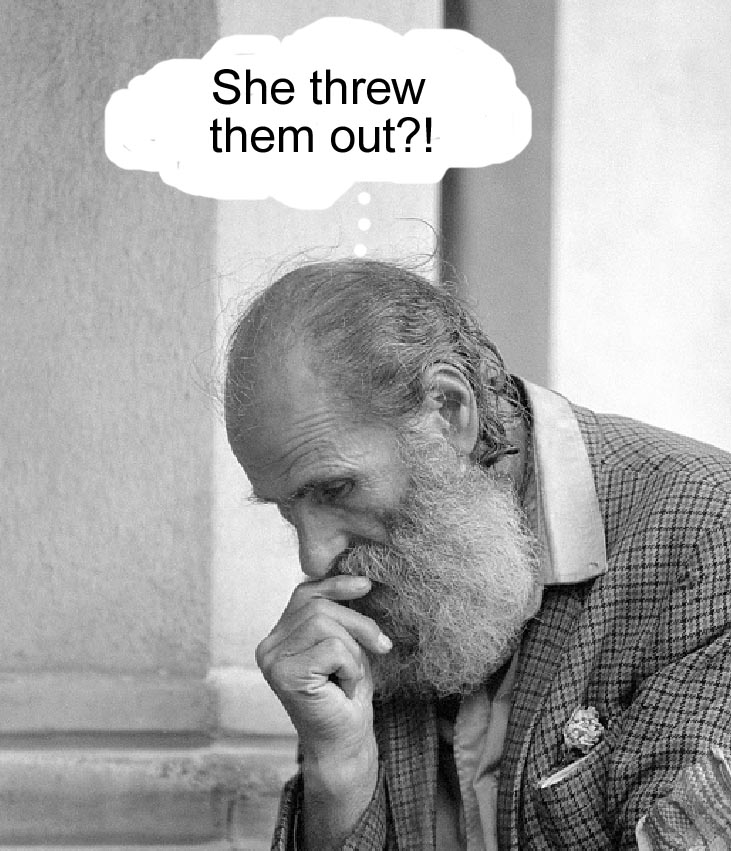
You Threw Out What???

Every boy who grew up in the Fifties has a story about how his mother threw out all his baseball cards and how, if he had them today, he could buy that house in the Hamptons. In the days before the i-Pod and the X-box we had our own, much simpler amusements, and one of them was collecting and trading baseball cards. Some of them would be truly valuable today, for example, the Topps 1952 Mickey Mantle Rookie card goes for around $162,000, The market for baseball cards has weakened along with the economy, unless you come across some of the true oldies that were originally included in cigarette packs. The Holy Grail of baseball cards is a 1909 Honus Wagner of the Pittsburgh Pirates that sold recently for $2.8 million!

To us they were just pictures of our favorite players, and we collected them because we loved baseball. The cards were included in bubble gum packs...I think you got five cards in every pack. The cards retained that bubble gum smell for months until too much handling by grubby little hands finally wore it off. Topps was the big manufacturer in those days, although there were other companies like Bowman who distributed them too. The trick was to get the really popular players like Mantle, Willie Mays and Jackie Robinson. Typically you had to go through a lot of no-names like Smokey Burgess and Virgil Trucks before finding a Hank Aaron or Bob Feller. Star players could be traded or used in side bets when flipping cards.

We didn't just collect baseball cards, we flipped them. The rules for card flipping were simple; from a standing position, the first player takes a card, holds it along his side and then, with a flip of the wrist, lets it drop to the floor. It lands, with the player's picture facing up (heads) or the player's stats facing up (tails). The second flipper then tries to match the card. If they match (both heads or both tails), player #2 wins the cards, if they did not match, the cards goes to player #1. We would sometimes flip 100 cards at a time, so Player #1 might flip 40 heads and 60 tails, and Player #2 had to flip the same number of heads and tails to win all 200 cards. Flipping cards was a real skill. A good card flipper, with a smooth motion, could flip 100 consecutive heads and no tails. I'm proud to count this skill among my life's accomplishments.

Here is another game that requires a subtle touch. Anywhere from two to five contestants can play at a time. In this game, the object is to get your card closer to the wall than any of your opponents. Players decide how many cards will be used per round and then mark a line a reasonable distance from the wall (something like 10 feet). Standing behind the line, the first player tosses his cards (one at a time), towards the wall. The next player then goes and tosses his cards, then the next player, etc. Ideally, you might get a card so close that it is actually leaning up against the wall. Of course, if your opponent is good and goes after you, he can knock it down and potentially land even closer. The player whose card is closest to the wall wins all cards tossed during that round.

After a while, being Brooklyn kids, we started making side bets. We might flip just 25 cards to save time, but if the winner won the game, he'd pick up not just the 50 cards flipped, but collect a side bet of say 100 more cards. Sometimes the side bets would be for a prized player, say a Yogi Berra or Duke Snyder. As much fun as we had with this pastime, it would probably be frowned on today. The moralists would complain that it encouraged gambling; some would whine that losing a flipping contest could hurt a child's self-esteem; and finally the germ-o-phobes would be hovering over their kids with the hand sanitizer. Today's parents are first-class killjoys.

Thanks to my ability as a flipper, I amassed a baseball card collection comprising a couple of thousand cards that were carefully stored in cigar boxes or shoe boxes. I had the cards separated into those only good enough for flipping, and those I truly prized, and would never trade or flip. I'm not sure when it happened, but one day they were all gone. It might have been when our old house on Somers Street was sold and my mother was looking to get rid of stuff. At the time it didn't seem like a big deal. I was older and the cards seemed like baggage from my childhood. Who knew that years later they could have funded my old age better than Social Security.

Note: Card game descriptions from Streetgames.com


CLICK ON DATES AT TOP RIGHT TO SEE OTHER “SPALDEEN DREAMS” POSTS. ALSO, READ MY OTHER BLOG: BRAINDROPS


LOOKING FOR A WORTHY CHARITY? TRY THESE FOLKS: Children's Craniofacial Association