Saturday, October 1, 2011

My Life as a Gay Man

There were a number of words for homosexuals when I was growing up, but "gay" was not one of them. We called them fags, queers, homos, sissies and a lot of other unflattering things. You have to appreciate that although there were gays back in the Fifties, the lifestyle was not exactly embraced. People didn't come out of the closet, they locked it from the inside. I can only imagine how tough life was for them. They couldn't even divulge their secret to their families. The image most men cultivated was the strong, silent type...guys like Gary Cooper, John Wayne and Clark Gable. Ironically, some of Hollywood's most popular stars were gay or bi-sexual but could never admit it: Randolph Scott, Cary Grant, Rock Hudson, Errol Flynn and Tab Hunter come to mind.

What young guy in the Fifties wouldn't have traded places with Rock Hudson or Cary Grant? Strong, handsome, rugged, yet with charm and a sense of humor. Who could blame Doris Day for "going all the way" with them...hell, I might have given it a shot myself! The lifestyle has a certain appeal, after all, men clearly don't understand women, but they understand other men. If only the relationship didn't have to be physical. I have seen the play "La Cage Aux Folles" a number of times and one of the reasons I enjoyed it so much is that they portrayed the gay lifestyle in a very sympathetic light. The characters are likeable and the author told their story in a way that aroused empathy and understanding.

As a kid, I had a couple of unlooked for gay encounters. Once in grammar school a Franciscan Brother kept me after school. He said he wanted to talk to me about something and I readily agreed. In my experience, when you weren't getting hit by these guys, everything else was OK. We were in an empty classroom and this creep sat down next to me and began talking in a very soothing voice. Soon his hand was on my knee and moving North. I was confused and angry that a trusted grownup would touch me this way. I just got up and ran out of the room. We never spoke of the incident.

Another time I was in high school and had fallen into the bad habit of skipping school and going to the movies. My usual truancy-mate, Paddy Jones, was out of school that day so I just went to our local movie theater, the Colonial, on Broadway. It was an early show during the week, so the theater was nearly empty. I was surprised when a man, who could have been the centerfold for Pedophile Magazine, came over and sat down next to me. I was annoyed but not suspicious until the guy put his hand on my inner thigh as casually as if he was reaching for his popcorn. Nobody ever warned us about these pervs back then; homosexuality was a taboo subject and I think Catholics thought they would go to H-E-L-L if they just uttered the word.


By the time I got into the army, I was wiser and warier. I had heard all the jokes about dropping the soap in the shower. We had a communal shower in the barracks, so if you wanted to be clean, you just took your chances. I can say though that if you look in the Guinness Book of Records under the category "Fastest Shower Ever Taken" you will find the name of yours truly.  


CLICK ON DATES AT TOP RIGHT TO SEE OTHER “SPALDEEN DREAMS” POSTS. ALSO, READ MY OTHER BLOG: "BRAINDROPS"

LOOKING FOR A WORTHY CHARITY? TRY THESE FOLKS:
Children's Craniofacial Association


Thursday, September 29, 2011

The Circle Closes

One of the pleasures of childhood was having my family around. I lived with my parents and siblings, but I also lived  with my extended family: grandparents, aunts, uncles, and cousins...there were even Godparents and assorted close friends who, in Italian-American circles, were awarded the honorary title of aunt or uncle. In 1950 I could take a street map of the East New York section of Brooklyn, draw a circle around a two mile radius of our house, and anybody I cared about would have lived inside that circle. Families tended to band together for mutual support. We regularly ate in each other's houses, watched each other's kids, and attended each other's weddings and funerals. Holidays were always spent together...noisy affairs with lined up tables, mis-matched chairs, borrowed dishes and home made wine that the adults gave to the kids, but not before mixing with soda to avoid brain damage.

We were closest with my mother's family; my father's family were all yellers, and when they visited, I ran and hid. Down the block on Somers Street lived my Aunt Anna and Uncle Jim, with their children Frank, Cathy, Anna Marie and Pat. Not far away Aunt Mary and Uncle Nick lived on Fulton Street with their kids, Millie, Nick and Sal. Grandma and Grandpa Camardi and their son Michael lived around the corner on Hull Street. We saw a lot of each other because it was common for even the youngest kids to walk everywhere unescorted. I could be away from home all day and never miss a meal. Aunt Anna lived to feed people. You were never in her house for ten minutes without a meal being placed before you. Historical Note: In exchange for having to put up with Italian men, God gave Italian women the gift of being able to create a delicious meal, virtually out of nothing.

Aunt Mary and Uncle Nick were the family entrepreneurs and worked hard in their quest for riches. Aunt Mary was a gifted seamstress and started up a couple of clothes-making businesses; Uncle Nick was a sweet guy who took his orders from her and cheerfully carried them out. They lived in a second-floor apartment whose windows were about ten feet from the elevated train that ran on Fulton Street. When the trains passed, some furniture in the room actually moved from the vibration. Their son Nick as a boy would sit for hours and bang his head against the back of a club chair. Today they would diagnose him with some disorder like A.D.D., but in fact it was just a phase he was going through. Nick grew up to be a fine husband and father. Their family moved to Selden, Long Island in the early 1960s when there were still buffalo roaming the plains.

Grandpa Pasquale owned a hat blocking and shoe shine store on Rockaway Avenue. On my visits there he would always find some busy work for me to do as an excuse to slip me a dime. I would usually blow it on an ice cold Mission pineapple soda from the red ice chest in front of Louie's Candy Store a few doors away from Grandpa's shop. I took Grandpa's success for granted back then without thinking how hard he had worked to achieve it. He came to America in 1912 with nothing but a dream and an immigrant's work ethic. After many years of struggling, he owned not only his own business, but his and Grandma Caterina's house. As their grandson, I can state with pride that their extraordinary qualities live on in my children.

Today I'd need a 3,000 mile circle to include our family. We are scattered coast to coast and "get together" only on Facebook and e-mail. About five years ago cousin Anna Marie hosted a reunion in New Jersey to which a surprising number of family members came. We had people in their 80s and children under one. It was so good to see them all in person, but the best thing for me was watching cousins who had never met catching up and laughing together, just like we did at all those family dinners. It was as if the circle had been closed.


CLICK ON DATES AT TOP RIGHT TO SEE OTHER “SPALDEEN DREAMS” POSTS. ALSO, READ MY OTHER BLOG: "BRAINDROPS"

LOOKING FOR A WORTHY CHARITY? TRY THESE FOLKS:
Children's Craniofacial Association

Monday, September 26, 2011

*** Spaldeen Dreams # 200 ***

Almost exactly three years ago, inspired by a new friend  from my old neighborhood, I began writing Spaldeen Dreams. I wanted my kids and their kids to have some idea what it was like growing up in Brooklyn when I was young. I think most of us, as we get older, regret not having talked more with our parents and grandparents about their lives before we arrived...I know I do. While it's true that my grandparents spoke little English, if I could have learned some Italian, maybe there would be more stories to tell. I have no excuse for not asking more questions of my parents, except maybe laziness and the arrogance of youth in thinking they had nothing to tell me.

Although I have tried to set down my stories honestly, there may be times when my imagination has filled in the gaps in my memory. If so, it was unintentional.  Sometimes I am dead certain that something is so only to find out it's not. I think we don't want to admit to ourselves that we are starting to forget details; the implications of that are too ominous. Luckily, the ability to do online research to capture information and images of the 1950s helps compensate for aging gray cells. Also working in my favor is the tendency for long term memory to be better than short term. I sometimes see an image or hear a song associated with my childhood, and the memories of the far away past come flooding back.

I have written mostly about small, everyday events as seen through the eyes of a 10-year old. The street games we played (mostly invented for want of money); what school was like and some of the teachers who made a difference;  the magic of radio and its influence on our lives; the movies and TV shows that entertained us; neighborhood characters; family holidays, picnics, and just eating together around the table every evening; my parents, grandparents and other family members; the mistakes I regret and the breaks that lifted me from the streets; my good fortune in marrying the patient and loving partner who helps me be a better person; and my children and granddaughter whose lives, if nothing else, justify my time on earth.

In the days before widespread literacy, family oral histories were a common way to pass along traditions. As more people learned to read and write, these stories and bits of family history began to be documented in family Bibles, annotated family trees, and even photographs. The other day we were looking at old 8mm home movies from 40-50 years ago. My kids are lucky to be able to see themselves as children growing up, as well as images of their "young" parents and others they barely remember. This connects them to those who came before in a very special way. Technology is helping too, with websites like the Ellis Island records archive, the U.S. Census Bureau online, and genealogy researchers like Ancestry.com; I was able to find out so much about my family using these resources.

I loved growing up in 1950s Brooklyn. The world was full of promise and America was leading the way. Things are different now, scarier. I want my little blog to preserve that simple time before cell phones, the Internet, I-pods, plasma TVs, microwave ovens and terrorists. Maybe this is my way of reaching back through the years to recapture lost youth. For whatever reason, I'll continue to write as long as I have something to say. I want to thank my wife for her ongoing help, and those other angels who have encouraged me along the way.


CLICK ON DATES AT TOP RIGHT TO SEE OTHER “SPALDEEN DREAMS” POSTS. ALSO, CLICK THE LINK AT RIGHT TO READ MY OTHER BLOG: "BRAINDROPS"


LOOKING FOR A WORTHY CHARITY? TRY THESE FOLKS:
Children's Craniofacial Association


Wednesday, September 21, 2011

Say Cheese

Considering how far the technology has advanced for cameras, they can't seem to replicate the warmth and feel of old studio photographs. I think some of my favorite images are the early tintypes that began appearing around the time of the Civil War. We've all seen the poignant photographs of soldiers posing proudly in the uniforms of their regiments. These portraits were usually taken before they went off to battle, and for many families, are all that remain of loved ones lost in battle. There is an intimacy in these pictures that somehow makes you feel that you know the subject. You would think them crude by today's digital photography standards, and incapable of stirring such feeling, but they do. The black and white likenesses that should seem stark and cold produce the exact opposite effect.

As photographic equipment improved in the twentieth century, it became common for families to visit neighborhood studios to have portraits taken for milestone events like First Communions, Confirmations, graduations and weddings. Studios sprang up in every neighborhood to accommodate the demand. They kept various props and backdrops to lend drama and visual appeal to the portraits they took. There were standard poses that didn't vary much; if you look at Communion pictures from the 1950s, they almost always featured Greek columns and prayer books with Rosary Beads draped over the book as if to remove all doubt that this was indeed a holy kid! The theme was repeated for Confirmation; why waste perfectly good prayer books and Rosary Beads.

Weddings were another event that required portraits. Often today, photographers don't have studios; instead they take pictures at the reception venues which are far more picturesque than in days of old. In the Fifties, the wedding party usually made a trip to the studio for pictures. It wasn't essential to have a photographer at the wedding. Who needed candid shots of capicola and provolone sandwiches being tossed from table to table. Most wedding pictures were posed portraits that, like Communion photos, had a sameness about them. The bride and groom, with their attendants, would always take a group shot. Then there was the mandatory pose of the bride with her wedding train spread out on the floor. My mother's lovely wedding day picture illustrates this perfectly.

Portrait prices were surprisingly affordable and even poor families were usually able to commemorate big occasions with portraits. Our photographer was Herbert Studios on Fulton Street. I can still clearly remember the man who took the pictures for so many years. He was whip thin, with a pencil mustache, and dressed like Fred Astaire in pleated slacks worn high, an open necked shirt, and for artistic effect, an ascot. Really, an ascot. I remember him applying makeup to cover the scrape on my knee that would not have shown up well in my short-pants Communion portrait. These studio portraits are part of every Fifties family's memorabilia and had the same warm and intimate qualities of the old tintypes.

I am very happy that some of these great old family photos survive. Many were lost little by little as the memories of one generation were passed down to the next. Looking at them is like traveling back in time. The faces and the places speak of who you are and where you came from. While it is still common for families to commemorate milestones in pictures, they are usually taken at some franchised mall outlet in glorious digital color that, to me, convey no warmth, no mood, no feeling. We are finally getting around to converting hours of Super 8 family movies to a DVD so that our children and grandchildren can see what they looked like growing up. It's not a Lincoln Studios portrait, but it will have to do.


CLICK ON DATES AT TOP RIGHT TO SEE OTHER “SPALDEEN DREAMS” POSTS. ALSO, READ MY OTHER BLOG: "BRAINDROPS"

LOOKING FOR A WORTHY CHARITY? TRY THESE FOLKS:
Children's Craniofacial Association


Thursday, September 15, 2011

Tony's Career

My dad “Tony Boots” worked hard all his life, but never had what you might call a career. As a kid I knew he had a job because he was always rushing out of the house late for work. He never ate breakfast that I know of. To save precious seconds in the morning, Dad would put his socks in his suit jacket pocket and put them on when he got to work. Tony was a familiar sight to our neighbors as he ran down Somers Street toward Rockaway Avenue to catch the bus that would take him to Pitkin Avenue and the A.S. Beck shoe store where he worked. It’s funny, if you looked at him decked out in a suit and tie you would think he worked in a bank or an office environment of some kind. In the 1950s, people dressed for work, even shoe store clerks.

As expenses in our household rose, including the tuition my parents paid for my sister, brother and I to attend Catholic school, Dad's income was no longer enough. He took a better paying job in the mail room of the accounting firm of Haskins and Sells. The morning commute became even more challenging now that Tony had to travel into “the city”. He seemed to like the job, even though by today’s standards it might seem almost demeaning for a grown man to work as a mail room clerk. It was different back then. Public assistance was less readily available, and even if it was, most self-respecting men would die before going on the dole to help support their families. The entitlement mentality that prevails today was still years off, so in addition to his new job, Tony worked weekends at the shoe store to help make ends meet.

Dad’s next job was for a company that made casket linings. I believe he worked in the office, since physical work was anathema to him. One year when I was in high school he asked me if I wanted to work the summer in their shipping department. I readily agreed since I needed the money to support my growing social life. The job involved unloading heavy bolts of satin or velvet cloth that were used to line the interiors of the mahogany taxis that transported people to the afterlife. I was a pretty strong kid, and prided myself on being able to carry a bolt of cloth on each shoulder. That is until my supervisor, a older man named George (with one arm mind you), elbowed me aside and hefted three bolts on each shoulder!

It was fun to spend time with my father at his work place. I would stop in at the shoe store once in a while and he seemed glad to see me. He was well liked by his co-workers because of his fun nature, quick with a joke and always up for a beer (or four) at the end of the day. Later in life Tony decided he needed to join the ranks of American stockholders and make some of that "easy" money he heard his bosses talking about. Despite my mother’s protests, he invested in some stocks that promptly plummeted in value. I think brokers would call him asking what stocks he was buying so they would know to sell. He had the same kind of luck with real estate, buying as a neighborhood was peaking, and selling after it had bottomed out. Dad was always a bit of a dreamer in the Ralph Kramden mold. That big score was always just around the corner.

After my father died in 1982 of lung cancer brought on by a lifetime of smoking, it took me a while to realize how much I missed him. Never one for father-son chats, Dad offered advice when he thought I needed it, but otherwise let me be. I sometimes wish I had asked him more about his life as a young man and what his family was like, but sadly that conversation never took place. His generation didn’t go in much for sharing feelings; they were too busy surviving the Great Depression and supporting their families. He wasn't formally educated, not successful by ordinary definitions, but he was there for us. I know he and Mom sacrificed so that we could get an education and have a shot at a better life. My main regret is that he never got to see how well his grandchildren turned out. I know how proud would have been.


CLICK ON DATES AT TOP RIGHT TO SEE OTHER “SPALDEEN DREAMS” POSTS. ALSO, READ MY OTHER BLOG: BRAINDROPS

LOOKING FOR A WORTHY CHARITY? TRY THESE FOLKS:
Children's Craniofacial Association 


Monday, September 12, 2011

Yaaa, We're Going to the Cemetery

The title of this piece should give you some idea how little I got out as a kid. From birth to age 13, my world was bounded by Atlantic Avenue, Bushwick Avenue, Eastern Parkway, and Saratoga Avenue...pretty much to school and back home. On weekends and summers we had a bit more freedom and would head for the wilds of Highland Park in Jamaica, ride to Crossbay Boulevard on our bikes, or spend a glorious day at Coney Island or Rockaway Beach. This provincial existence was broken up only by rare trips to places we didn't normally go. One of them was the cemetery.

My father's family was buried in Holy Cross Cemetery located in the East Flatbush section of Brooklyn. Founded in 1849, Holy Cross occupied a large, park-like plot of land dotted with shade trees, grassy hills, and of course, burial plots. Some of the better known residents there include the great Brooklyn Dodger first baseman, Gil Hodges; the larger than life gambler, Diamond Jim Brady, and the infamous bank robber, Willie Sutton. We used the entrance on Tilden Avenue, an impressive structure that set the mood for the seriousness of purpose for visitors. Usually my father and my Uncle Joe would make this pilgrimage once a year to visit their mother Lucy, sister Mary who died tragically young, and other family members.

After the brothers braced themselves with a few shots of Fleishman's Rye (which doubles as a handy disinfectant) and beer chasers, the three of us would pile into Uncle Joe's two-tone green 1953 Chevy Bel Air and the adventure began. I sat glued to the window as we drove down Eastern Parkway, past Prospect Park and finally into Flatbush. In the Fifties, Flatbush was almost country-like, and inhabited by mostly Jewish families living in neat, one-family houses. Lawns were new to me and I remember thinking these people must be rich to live like this. When we arrived, it took a few minutes of wrong turns, muttered curses, and fevered searching for the name of the person at the end of the row of tombstones that marked the place where our family lay.

Our plots were in a remote corner of the cemetery, and there were few other visitors around when we paid our respects. After a quick prayer, I would be allowed to roam while my father and uncle spruced up the grave site. There were water spigots scattered around the property so that people could water the flowers they left on the graves of loved ones. I would amuse myself by finding an empty container, filling it with water, and then emptying it on the bushes planted on the nearby graves. I read the names and dates on the headstones and wondered why some people lived so long while others died so young. It seemed unfair. When I got older, the men would give their backs a break and permit me to plant whatever it was they had picked up at the florist's outside the cemetery gate. 

I always felt at peace in the cemetery. In the middle of bustling Brooklyn was this quiet oasis with trees and pathways winding between the headstones. Surprisingly, no noise intruded to disturb the sleeping residents. In their conversation in the car, my father and his brother complained about making these visits, but once they knelt down to pray, I could see a change come over them. Maybe they were thinking of their own mortality and how soon they would be resting under these stately oaks. The ride home was usually quieter than the ride there.


CLICK ON DATES AT TOP RIGHT TO SEE OTHER “SPALDEEN DREAMS” POSTS. ALSO, READ MY OTHER BLOG: BRAINDROPS

LOOKING FOR A WORTHY CHARITY? TRY THESE FOLKS:
Children's Craniofacial Association


Sunday, September 4, 2011

Coney Is Back!

It's no secret that Coney Island is bound up with my childhood. In the dark days before Disneyworld, Coney Island was our fantasy world. Even Mom needed some relief from having us underfoot all summer, and when she couldn't take it any more, off we went. Going to the beach wasn't simply a matter of jumping in the car and arriving seaside in 30 minutes. This was an all-day outing that took planning, logistics and courage. We rode the subway carrying our beach blankets, towels, pails and shovels, and of course the brown bags dripping oil from the peppers and eggs or Italian tuna sandwiches. There was also a gallon thermos jug full of grape Kool-Aid that could be filled to the brim for about four cents.

We took the A train to Franklin Avenue. People would snap our pictures as we got off the subway because they didn't see many white people in that neighborhood. We walked up the steps to the elevated Coney Island train that actually had woven straw seats. You can only imagine my mother, and usually one of my aunts, trying to keep tabs on this caravan of kids and baggage. The ride was above ground and we all ran for window seats so we would have a good view of the exotic landscape that was just a twenty-minute drive from home, but seemed to us like another world. We shifted uncomfortably in our straw seats as the bathing suits we wore under our clothes chaffed in the non-air-conditioned cars. At last the tang of salt air told us we were there.

We ran down the train steps, with the slower adults trying to keep up and screaming at us to stay together. The pull of the ocean and the sounds of crashing waves drew us up the narrow streets that led to the glorious boardwalk. We then slogged through the cool sand under the boardwalk, giggling past the young couples groping each other to the sounds of their new fangled transistor radios. Finally, we hit the sun-splashed beach and broke into a run as the sand turned hot under our feet. Mom would splurge for the fifty cent umbrella rental fee so that the younger kids in the troupe could have a shady place to take their mid-day nap. They slathered us up with Coppertone and turned us loose, hoping not to see us for a few hours.

After a day of diving into the waves, burying each other in the wet sand near the water, and chasing after the Good Humor man who sold ice cream on the beach, we should have been exhausted, but we knew the day was not yet over. After our bathing suits dried, we got dressed and headed across the boardwalk to the Steeplechase Park amusement area. We usually stopped first at one of the custard stands for the best pistachio or banana soft ice cream I've ever had. We were then free to tour the rides in the park. An admission entitled you to so many rides, and they would punch your round ticket for each ride you went on. The Panama Slide, the Airplane Swings, The Wild Mouse and of course the Steeplechase horses that circled the park on a track. It was a ten-year old's heaven on earth.

We recently visited the Coney Island Aquarium. Unfortunately, it was "Screaming Kids Get in Free" day and we didn't hang around for long. We took a stroll on the boardwalk down to Nathan's for lunch. I was most pleasantly surprised to see the beach and the amusement area thriving. After years of hard times, they have cleaned things up and it looked very much like it did when I was a boy. The Cyclone and the Wonder Wheel are still there, and if you squint really hard, it's 1952 again...your vision and hearing are perfect, nothing hurts, and you can leap tall buildings in a single bound. But back to reality; now where is that sun block, and I can't find my eye drops again.

Photo Credit: http://andrewprokos.com/photo/coney-island-cyclone-rollercoaster/


CLICK ON DATES AT TOP RIGHT TO SEE OTHER “SPALDEEN DREAMS” POSTS. ALSO, READ MY OTHER BLOG: BRAINDROPS

LOOKING FOR A WORTHY CHARITY? TRY THESE FOLKS:
Children's Craniofacial Association  


Monday, August 29, 2011

Doubt

As a diversion in the aftermath of Hurricane Irene, we watched the movie "Doubt" set in the Bronx in the 1960s. It's about a Sister of Charity (Meryl Streep) who squares off against a Catholic priest (Philip Seymour Hoffman) over the nun's suspicions of an improper relationship between the priest and a young boy who attends St. Nicholas School where the nun presides as Principal with an iron fist. The movie was wonderfully written and acted, but more to the point of this blog, it released a flood of memories for me about life inside the walls of a Catholic grammar school. Life was much less complicated then; we never knew what lay ahead like the Cuban Missile Crisis, the Kennedy assassination, the exploration of space, and race riots in our streets. My biggest daily worry was not getting smacked around by the screws (Franciscan brothers, Sisters of St. Joseph, and lay teachers) who ruthlessly patrolled the halls of Our Lady of Lourdes School.

Watching "Doubt" was as if someone flipped a switch in my head and I was back in those classrooms. Don't get me wrong...I loved school in spite of the daily threat of bodily harm, but it was an ongoing battle between a boy's temptation to do what you were told not to do (like talking in class) and the consequences of getting caught, as Brother Jude advanced down that classroom aisle with murder in his eyes, always careful to remove his watch lest he damage it on your skull. There were never any hard feelings involved in administering discipline; it was just business. Brother Jude would eagerly join in a game of Triangle (schoolyard baseball) at lunch time and act as if he had never boxed your ears an hour before. The screenwriter for the movie had to experience that world to write a script that so exactly captured the mood of that place and time.

I always say I'm not a big Meryl Streep fan, yet she's been brilliant in every movie I've ever seen her in; Doubt was no exception. She plays Sister Aloysius, a hard-case nun who treats change like the plague. She bemoans the decline in penmanship, and attributes it in part to the introduction of ball point pens. "You have to press down so hard, it makes you write like a monkey" she pronounces. "I'm so sorry I ever even allowed them to use cartridge fountain pens."  The scenes at Sunday Mass were also spot on, as a vigilant nun patrols the aisles of the church administering a sharp smack to the back of the head of any foolish child who dares to talk or fall asleep. Sister Aloysius metes out justice from her school office with malice for all and mercy for none. To a boy caught listening to a transistor radio in class: "Write out the multiplication tables ten times each, and make sure they're legible." No transgression will ever pass Sister Aloysius unpunished.

Father Flynn, played beautifully by Philip Seymour Hoffman, is a victim of Sister Aloysius when her accusing mind and relentless persecution cause him to transfer out of the parish. He so reminded me of some of the more approachable priests from my old church like Father Schaeffer, who looked like JFK and made a real effort to reach out to the young boys of the parish. I saw him once take on a group of punks from outside the neighborhood who tried to crash a school dance. We followed him outside to help, but he needed none as he soon had the tough guys licking their wounds and on the run. It dawned on me that his interest in us, when viewed through the eyes of a Sister Aloysius, might have well ended his career as a priest. I know the Catholic Church had its problems with abusive priests, but the movie left me conflicted about the line between genuine priestly affection and child abuse.

At some point in the film, Father Flynn gives a sermon about gossip. A woman confides to her confessor that she is guilty of gossiping. For her penance he tells her to cut a pillow, go to the roof of her house, and empty all the feathers into the air, then come back to him. She does as she is told, and the priest says to her: "Now go and retrieve all those feathers and put them back into the pillow." That's impossible she says, they are in the air and cannot be retrieved. "And that is gossip" says Father Flynn.  Even the pious and always certain Sister Aloysius tearfully admits to doubts at the end of the movie. A good lesson for us all. Matthew 7:1 Judge Not Lest Ye Be Judged.


CLICK ON DATES AT TOP RIGHT TO SEE OTHER “SPALDEEN DREAMS” POSTS. ALSO, READ MY OTHER BLOG: BRAINDROPS

LOOKING FOR A WORTHY CHARITY? TRY THESE FOLKS:
Children's Craniofacial Association 


Friday, August 12, 2011

Ma, I'm Sick

I want to get something off my chest. When I didn't feel like going to school, I would take advantage of my mother's love for me by feigning illness. I was basically a very healthy kid, so I was rarely genuinely sick. That helped my credibility because when I said I felt sick,  Mom believed me. She would always gauge whether I had a fever by kissing my forehead. Then she'd say: "You don't feel warm, let me get the thermometer." Trusting soul that she was, Mom would always stick it under my tongue and go off to do something. This gave me time to rub the bulb of the thermometer rapidly back and forth across the bed sheet, thereby creating enough heat friction to produce a temperature. Once I overdid it and Mom nearly fell over when she read 105 degrees!

Staying home sick from school was one of the best boondoggles of childhood. I was pampered beyond belief. I felt a little guilty when poor Mom fussed over me, cutting the crusts off my sandwiches, bringing up a stack of comics for me to read, and later on, when we got our first television, fluffing up the pillows on the sofa while I watched mindless cartoons like Junior Frolics, Felix the Cat and Koko the Clown who always crawled out of the inkwell of his creator and onto the screen. Getting control of the TV was a real perk of feigned illness; my sister never got to watch what she wanted. Even if it was a show I enjoyed, I refused to put on any channel she wanted just for spite. Yes, I was a real dick.

Like most Italian and Jewish mothers, the number one remedy for anything that ailed you was chicken soup. This is not a myth but a sacred truth. If there was no other reason to fake illness, getting to eat Mom's chicken soup was reason enough. She made it from scratch with celery, carrots, and rice or small pasta like Orzo. The chicken fat you could skim off the top of the pot was thick enough to lubricate a small battleship, but that's what gave this soup its curative properties. I ate bowl after bowl topped off with Oysterette crackers. If Mom had any suspicions about how a kid who was so sick could have such a voracious appetite, she never let on.

I think by the time I was in high school, Mom had wised up. She packed me off to school no matter how much I whined. This called for a strategy shift; how could I dupe the school nurse into sending me home sick? There were a few "sure-fire" tricks that would get the job done according to some of the seasoned delinquents in my class. One was to put a penny under your tongue along with the thermometer. Other than satisfying any curiosity about what a penny tastes like, this never worked. Another was to put an ink blotter in your shoe. In the days before ballpoint pens, we used ink blotters to keep the blue-black ink in our fountain pens from smearing. Another bust. Finally, I took to just playing hooky and writing excuse notes from home to cover my absences. Yes, I know, a dick.

As a teen, I had a promising career as a forger. For instance, I could draw great replicas of  bus or subway passes and would sell them to kids who had lost their real ones. I could also imitate my mother's handwriting perfectly, and so writing excuse notes was a breeze. This ruse went swimmingly until one time when I made a spelling error on a note, realized it and stuck it in one of my text books. I wrote out another note and it was accepted as usual. Unfortunately, the first note slipped from the pages of my book and some do-gooder found and turned it in. Somehow the attendance office matched up the two notes and the jig was up. My parents were called to school and my poor mother was shocked to find out how many excuse notes she had written. This little caper prompted the guidance counsellor to suggest (demand) that I transfer to another school.

Once in a while I'd stay home sick from work, and found that the thrill of getting away with something had not diminished. I finally wised up and gave up my criminal ways, in fact, later in my career I prided myself on getting to work no matter how lousy I felt. I only wish Mom had been around to witness my redemption.


CLICK ON DATES AT TOP RIGHT TO SEE OTHER “SPALDEEN DREAMS” POSTS. ALSO, READ MY OTHER BLOG: BRAINDROPS

LOOKING FOR A WORTHY CHARITY? TRY THESE FOLKS:
Children's Craniofacial Association


Sunday, August 7, 2011

Juxtaposition of the Incongruous

A couple of weeks ago I taught a three-day writing class for my old company. Nothing really creative, just a refresher in basic grammar, punctuation and structure for an audience of customer service representatives who are in training to become senior customer service representatives. One of the new duties they will pick up if they earn the senior title is writing original letters to customers. Over the years, the company has found a disappointing lack of writing skill in its employees including those in management positions. After day one of the class I heard one student say to another: "So that's what an adverb is." Miss Baumann would be horrified.

I've written before about my fourth grade teacher, Miss Baumann. (We never knew her first name because we would never dream of addressing her so informally) She was one of a group of dedicated teachers at Our Lady of Lourdes School who, for far too little money, took scruffy street urchins and taught them the King's English. Not just enough to get by, but grammatically correct, properly spelled, punctuated, and capitalized English. Our class was not filled with "gifted and talented" kids to merit such a thorough grounding in our native tongue, but in fact, it was expected that every student who graduated that school could write good English. The Catholic school system had never lowered expectations for us just because we were poor or descended from immigrants; there was one high standard and everyone was pushed to meet it.

Trying to teach these skills now, to adults,  is very difficult. It's impossible to do in a three day class what wasn't accomplished in 12 years of formal schooling. These students are not dumb, but their basic elementary and high school education was so fundamentally flawed in that it did not place enough stress on English. What good is math and science if you can't communicate your ideas in writing. The English and writing curriculum have been terribly diluted over the years. People now get college degrees who can't compose a decent resume. As expectations spiral lower and lower, such idiotic books like "Handwriting Without Tears" find their way into our school libraries. We have ourselves to blame for tolerating this erosion; we don't ask enough of our kids, and the result is sadly apparent.

Compounding the schools' failure to teach proper English is the tendency for parents to park their kids in front of a TV or computer and take no interest in their education. Reading to and with kids can be a tremendous help in developing their ear. Listening to our language being spoken properly helps children know what good English sounds like by training their ear. They may not be able to cite the rule that makes a sentence grammatically incorrect, but it will clank on their ear when spoken aloud, and they will know to give it a second look. As it is, they enter adulthood blithely unaware of their inability to write correctly, and become frustrated when the deficiency is called to their attention. Trying to fix it now is nearly impossible, especially in the age of e-mail and "textspeak".

To impress on you just how well those Lourdes English drills sank in, let me relate a little story. I attended college at night while working days to support my family. I was always the oldest in class, but I didn't care. The wonderful gift of English that I had been given by teachers like Miss Baumann served me well. Even in classes in which I wasn't that strong, the professors were so impressed by papers that weren't full of typos, misspellings and grammatical errors that I usually got better grades than I probably deserved. In one class, an instructor asked if anyone knew the literary term for the placement of very dissiimilar elements side by side in the same sentence. Somewhere from the deep recesses of my memory came the answer: "Juxtaposition of the incongruous" I volunteered.

The students turned in their seats staring at me as if I had spoken Swahili. My instructor's jaw dropped a little as he nodded his head to indicate that my answer was correct. The only one who would not have been surprised by my answer was dear Miss Baumann.


CLICK ON DATES AT TOP RIGHT TO SEE OTHER  “SPALDEEN DREAMS” POSTS. ALSO, READ MY OTHER BLOG: BRAINDROPS

LOOKING FOR A WORTHY CHARITY? TRY THESE FOLKS:
Children's Craniofacial Association


Wednesday, July 6, 2011

The Power of Formica

I look at the appliances and gadgets around my house and think about the days when things were much simpler. No exotic coffee makers, (no exotic coffees for that matter), no air conditioning, computers, cell phones, video games, microwaves, none of the things we take for granted in modern life. But we were happy with what we had. I read an article recently about how the 2003 blackout in New York City actually brought families and neighborhoods together because all of the electronic distractions that take up our attention were not available. People actually spoke to each other.

Take the kitchen for example. Now there are all kinds of streamlined kitchen counter configurations with stools and easy-to-make instant meals designed for the convenience of varying family schedules and food preferences. Growing up, I sat with my parents, sister and brother at the Formica and chrome table in the kitchen. We ate the home-cooked meal Mom had made and talked about what went on during our day. I find it funny that psychologists now recommend sitting at the table for family dinners as a way to promote togetherness and quality family time. We did the same thing, but we called it eating.
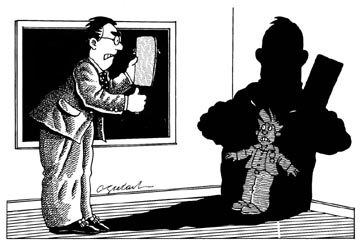
After dinner we would listen to the radio, or when we finally got one, watch our favorite shows on the RCA black and white TV. I remember feeling happy hearing my mother laugh out loud at the Jack Benny or Red Skeleton Shows. I would watch the Yankee games with my father and talk a little baseball. One of my jobs was to keep him supplied with cold Piels beers. We were apart during the day, what with work and school, and this was our time to be together as a family. I even took a time out from teasing my sister when we watched kiddy shows like Howdy Doody and The Mickey Mouse Club together. Music was played on a multi-speed "Victrola", a turntable that spun 78 rpm vinyl records, and had an adaptor for playing 45 rpms when they came out. No I-pods, no down loads, but it was good enough.

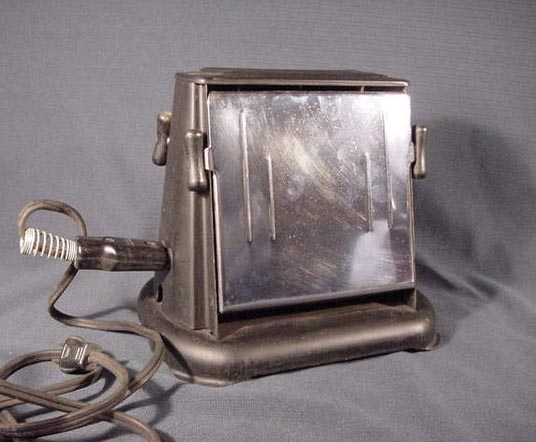
Our refrigerator was a Kelvinator with old-fashioned ice cube trays. No automatic ice maker, no instant cold water, just a box with a tiny freezer that had to be manually defrosted. We survived. For many years my mother did laundry in a wash tub, and hung it out to dry on a clothes line. When we got a washing machine it was a big deal. We never did get a dryer. Somehow, Mom managed. We actually had a toaster with little doors that opened on either side. You placed the bread in, closed the doors, and a heating element toasted the bread. You had to watch it because there was no timer or darkness setting. Smoke billowing out of the toaster meant you had waited too long. Know what...it made better toast than the damn fancy toaster I have now.

Frozen foods were just making their appearance, so everything we ate was fresh from the grocery store. No propane grill in the back yard...we barbecued using  charcoal briquettes and lighter fluid. It wasn't uncommon to see men without eyebrows in the summer. In the days before microwaves, I remember what a splash TV dinners made when Swanson introduced them in 1953. They were a convenience to be sure, but it was the beginning of the end for sit-down family dinners at the kitchen table. Now everybody sat in front of the TV eating off folding trays. One small luxury we had must have been a wedding gift to my parents because we couldn't afford to buy it. It was a Westinghouse electric sandwich press that made the best damn grilled cheese sandwiches I ever ate. 

Funny but it seems like the more modern conveniences that got introduced to our lives, the more isolated we became. Dads heat something up in the microwave when they get home late from work. Kids bring dinner to their rooms so they don't have to be away from Facebook for a whole hour. Mom pops in a Lean Cuisine before heading off to Pilates. Is it possible that a lot of the problems that lead to divorces and broken families could be solved with a Formica table?


CLICK ON DATES AT TOP RIGHT TO SEE OTHER “SPALDEEN DREAMS” POSTS. ALSO, READ MY OTHER BLOG: BRAINDROPS

LOOKING FOR A WORTHY CHARITY? TRY THESE FOLKS:
Children's Craniofacial Association