Tuesday, January 5, 2010

The Price of Progress

Ever wonder how much easier we have it today compared to fifty years ago? Technology has truly revolutionized the way we live, not only from the standpoint of big changes like space travel and giant leaps in medicine, but in the everyday things that affect us all. Let's take a stroll around the house to see how much life has changed.


Making a cup of coffee used to require a percolator pot, ground coffee placed in a nest (we used to get our coffee ground fresh at the A&P) and water, all heated on a stove until the water flowed through the coffee in the nest enough times to give it some taste...probably a 15-20 minute process. We now have sitting on our kitchen counter a Keurig Coffee Maker that looks like a tiny juke box. You insert a coffee "pod" that comes in many varieties including decaffeinated, push the button, and a delicious cup of brewed coffee is ready to drink. For Christmas our kids gave us a slightly sleeker version of this wondrous machine for making espresso. I resisted buying this machine on the grounds (no pun intended) that it was an extravagant waste of money. You'd have to fight me now to get it back.

Not too many people remember the old record players (we called them "Victrolas") and the 78 RPM vinyl records they played, one at a time. Then came the bigger vinyl records that played at 33 1/3 RPM and could be stacked on a record changer to play several at once. Every living room had a stereo system or "hi-fi" the size of a Buick Roadmaster on which to play their records. Rapidly changing technology brought us 8-track tapes, then cassette tapes, then CDs. Now we listen to our downloaded music on an I-pod the size of a pack of cigarettes. I still have stacks of vinyl records, cassette tapes, and CDs that clutter up my house. Maybe I can donate them to the Amish.

While we're in the living room, take a look at that 52 inch plasma TV and appreciate the long journey television has made. In the fifties we had black and white TVs that got a few channels, and then only if you moved the antenna (or "aerial" as my father called it) until the picture appeared through the snowy static. You watched what was on when it was on. Then came color TV with remote controls, and in the seventies the VCR (celestial music here). Now you could tape a show and watch at your convenience. Finally came cable TV where there are now hundreds of channels with nothing worth watching instead of just a few. VCR/VHS tapes were replaced by DVDs and the ability to record from your cable box. This latter innovation is a great convenience; if we get nuked and can't leave the house for five years, I have enough old movies recorded to get me through.

Let's move on to the bathroom. This used to be a very functional place where maybe the only luxury was a copy of the Sears catalog to read while taking care of business. We never even had a tub, just a stall shower with such lousy water pressure that only gravity allowed it to work at all. Our bathroom was adjacent to a large, unheated pantry attached to the house, so nobody lingered in there for fear of hypothermia. Today, bathrooms are showplaces of marble tile and gleaming metal. Over sized tubs with Jacuzzis, mood lighting, electric tooth brushes and water pics, fluffy, pastel colored towels, and enough assorted bath soaps and lotions for a Sultan's harem. It's almost a shame to use the place for its intended purpose.

The bedroom has seen maybe the fewest changes, although most are now air-conditioned. You can also buy a "white noise" machine to simulate sounds to help you sleep. During the summer when it got hot, I used to turn my bed so that I could sleep with my head nearly out the window. If the phone rang, you ran down to the kitchen to answer it. Then came "Princess" extension phones in the color of your choice, followed by portable phones, answering machines, cell phones and now Apple makes an I-phone that I think can cook your breakfast if you have the patience to read the user manual. I don't.

The innovations go on and on. The microwave oven, laptop computer, video games, fast food, the snow-blower in the garage, the seat-warmer in your car....what will be next? I appreciate progress as much as the next guy, I'm just not sure it was all for the good. Too many kids are obese and socially awkward because of not enough active play time with other children. The pleasure of sitting down with a good book is known to fewer people, especially the young. The idea of neighborhoods where people knew and helped each other is disappearing. The most commonly prescribed drugs in the country are for depression. Maybe technology extracts a price that we shouldn't be so willing to pay.


CLICK ON DATES AT TOP RIGHT TO SEE OTHER “SPALDEEN DREAMS” POSTS. ALSO, READ MY OTHER BLOG: BRAINDROPS


LOOKING FOR A WORTHY CHARITY? TRY THESE FOLKS: Children's Craniofacial Association

Sunday, January 3, 2010

What's That Smell?

Sometimes I'll be going about my business when an aroma will hit my nostrils and immediately get my attention. (Yes you could make some "big nose" joke here, but you're better than that.) There are certain smells that have the ability to transport me back in time to the days when my back didn't ache, my eyes were like an eagle's, and I had a full head of wavy hair. (Again, resist the cheap jokes please.) The human mind links our five senses to things or events associated with past experiences, and when that sense is stimulated, these things or events rush into our consciousness. For me, I think smells are a powerful way of experiencing the world.

As I wrote in an earlier blog, I was close to adulthood before it dawned on me that not everyone awoke to the smell of frying meatballs on Sunday mornings. To this day that wonderful smell transports me back to my bed on Somers Street, to a time when I could sleep past 6am. Being Italian, our family ate macaroni (not pasta) on Sundays, complete with delicious meatballs, sausage and braccioles. This is simply something Italians did as if it were the eleventh commandment; we had no choice. My mother would start frying the meatballs probably around 9am, and their fragrance would permeate the house. After frying, they went into the simmering gravy (not sauce) and took on a new tomato-cloaked, mouth-watering aroma that promised good eating by around 3pm. It's one of my strongest memories.

In the days before antibiotics, when we got sick, my mother would give us cherry-flavored cough syrup, slather our chests with an ointment called Musterole and put us to bed. This stuff was better than Penicillin. It had a unique smell like a cross between camphor, mustard and menthol, and was supposed to help clear congestion in the chest. We had a "fifties" themed Christmas a few years ago, and my daughter Laura actually presented me with a couple of jars of this stuff, probably smuggled in from some Mexican clinic. I took a whiff of it as I wrote this column, and I expect my sinuses will be clear until the Fourth of July.

They don't use it as much as they used to at Catholic mass, but the smell of burning incense is another time travel ticket for me. I was (and still am) fascinated by the Catholic ritual of high mass. In the days when the church of Our Lady of Lourdes in Brooklyn was a thriving parish, high mass was something really special. An outsider couldn't imagine more pomp and circumstance at St. Peter's in Rome. The altar was crowded with elaborately robed priests and altar boys, each with his own special role in celebrating the mass. I loved when the priest burned incense in a gold colored vessel on a chain called a "censer", and walked around the perimeter of the big altar, rocking the censer in three pendulum swings toward each section of the congregation until the rich, exotic smell filled the church. Neat.

As we got off the Brighton Train at the Coney Island stop, and walked down the stairs to the street, the smell hit you...the beach. It's beyond my ability to adequately describe this heady aroma, but if you like going to the seashore, you probably know what I'm talking about. Part salt, part sand and part ocean, the smell is carried on soft summer breezes and lures you down to the sea like the Sirens' song in Greek mythology lured smitten sailors to their death on the rocks. There was a Seinfeld episode where Kramer had the idea to sell a fragrance called "The Beach" to Calvin Klein. If they could put it in a bottle, I'd buy it.

Smell associations are involuntary but inescapable; no matter what you're doing when the smell hits you, your brain takes control of your thought process and makes the connection that takes you swiftly back in time. The smells are not always pleasant, like the dentist's office, but the associations are just as strong. Sometimes the smell will never be experienced in modern times, for example, I'm thankful there aren't many chicken markets around today. So just let your nose take you back (you can't help it you know) and smile or cringe as the case may be. Mmmm, is that meatballs I smell??

CLICK ON DATES AT TOP RIGHT TO SEE OTHER “SPALDEEN DREAMS” POSTS. ALSO, READ MY OTHER BLOG: BRAINDROPS
LOOKING FOR A WORTHY CHARITY? TRY THESE FOLKS: Children's Craniofacial Association

Friday, January 1, 2010

Auld Lang Syne

On New Year's Eve we had a quiet dinner with my sister-in-law and her husband. It was an enjoyable, low-key evening with family. We watched the ball drop in Times Square and the revelers standing in the rain to party in 2010. On a sad note, we again saw Dick Clark carry on his long-standing tradition of ushering in the New Year, despite the ravages of a serious stroke he suffered in 2004. One wants to applaud Dick for his courage in appearing even though he can barely speak, but one also questions his judgement in subjecting himself to the cruel jokes made at his expense. Maybe it's time to step aside. But I digress.

I got to thinking about how New Year's Eve has changed since the days when I was still a party animal. The crowd last night numbered in the millions, and the Times Square event has become a carefully orchestrated, world-renowned celebration. Back in the early Sixties I made a couple of pilgrimages to a very different Times Square. Groups of us went in on the subway carrying pints of the cheapest booze we could buy. My favorite was Old Mr. Boston Blackberry Brandy. Today alcohol is not allowed but back then it was our misguided way of dealing with the cold.

The crowds were minuscule then, maybe 10,000 people, mostly locals. There were no funny hats or goofy goggles sold at extravagant tourist prices. There were no armies of police concerned with terrorist attacks; the biggest problem the cops dealt with stemmed directly from over-consumption of Blackberry Brandy. We just kind of hung out, arriving around 10 pm. Today people show up 24 hours in advance to get anywhere near the spot where the ball drops. There was no lavish entertainment except gawking at the storefronts housing the porn palaces that made Times Square infamous before Disney and the big box stores moved in to clean up the neighborhood.

New Year's Eve parties were far more numerous and raucous in the Sixties before the big crackdown on drunk driving. People got dressed and went to restaurants and night clubs that typically featured a one-price package for dinner, drinks and dancing. And drink we did. Leaving those parties and driving home was a real adventure; the road was full of weaving cars and people behind the wheel who were in no condition to drive. The designated driver was the guy who could find his car keys. Pretty irresponsible...that's one aspect of New Year's Eve I don't miss. Parties today tend to be more sedate, family-oriented affairs and I like it much better that way.

The next day we would crawl out of bed and head somewhere for a big New Year's Day dinner. My mother-in-law was the hands-down champ of serving up multi-course, pants-open at-the-top meals that left you in a semi-comatose state. Dinner would start with an antipasto that in itself would pass for a holiday dinner in non-Italian families. Then came steaming bowls of chicken soup with tiny meatballs (an homage to our food-loving Jewish brethren), a fancy pasta like manicotti, lasagne or ravioli, "gravy meat" which consisted of meatballs, hot and sweet sausage, bracciole, pork meat, (no, we're not done), then came a roast or a turkey with accompanying side dishes like potato croquettes, crumbled up sausage with mushrooms, spinach or escarole pie, and sometimes a calamari pie. About now people were nodding off so the whistle blew for half-time.

After the break came salad (typically a last course in Italian households) roasted chestnuts, assorted mixed nuts, wedges of fennel cut up, and fruit. Then came dessert: Italian pastries, homemade pies, Ebingers cakes and coffee, both espresso and "American" coffee. Finally, for anyone who was still awake came the candy. My wife's Aunt Lu worked as a buyer in the A&S department store's candy shop, and we had enough candy to make a dentist weep. Boxes of assorted chocolates, marzipan, colored jelly slices and others that I always made room for, candy being a serious weakness of mine.

These traditions were ours and I loved them. We try to keep them alive for our children, and they are surprisingly willing, even excited about carrying them on. Let's pray that in 2010, people everywhere get to carry on their traditions in peace.


CLICK ON DATES AT TOP RIGHT TO SEE OTHER "SPALDEEN DREAMS" POSTS.

LOOKING FOR A WORTHY CHARITY? TRY THESE FOLKS:Children's Craniofacial Association

Wednesday, December 23, 2009

The Brooklyn Bums

As a New York Yankee fan, I had little use for their arch rival, the Brooklyn Dodgers, but being a Brooklyn resident surrounded by Dodger fans, I had to blend in. Every once in a while a bunch of us would take the subway to Ebbets Field where the Dodgers played. Ebbets Field was on the block bound by Bedford Avenue. Sullivan Place, McKeever Place, and Montgomery Street. Club owner Charles Ebbets acquired the property over several years, starting in 1908, by buying parcels of land until he owned the entire block. This land included the site of a garbage dump called Pigtown because of the pigs that once ate their fill there. Despite its humble beginnings, Ebbets Field would be the scene of some of the greatest baseball drama in the history of the game.

At the time I was growing up, New York City was lucky enough to have three major league baseball teams, the powerhouse Yankees, the Giants who played in the Polo Grounds where Willie Mays patrolled center field, and Brooklyn's favorite, the Dodgers. It was very frustrating for Dodger fans back then because despite having great players like Robinson, Snyder, Hodges, Campanella and Furillo, and playing good baseball, they always lost in the World Series to the Yankees. In 1941, '47, '49, '52, '53, '55 and 1956 they played the Yankees in the World Series and lost every time except in 1955, the year Brooklyn had it's sweet revenge.

I tried my best not to gloat when the Yankees won title after title, not because I didn't want to, but most of my friends were Dodger fans and I valued my front teeth. Maybe the Dodger's most heartbreaking loss came, not at the hands of the New York Yankees, but by the New York Giants. In 1951 the two teams were in a three-game playoff for the National League Pennant after the Dodgers had squandered a 13-game lead they held in August. Each team having won a game, the pennant came down to game three. The Dodgers looked solid as they led 4-1 in the bottom of the ninth inning when their pitching ace, Don Newcombe, began to tire and gave up a run, making the score 4-2.

Newcombe tried to take himself out of the game, but was convinced to continue on the mound by second baseman Jackie Robinson, a fateful error in judgement. The Giants touched Newcombe for a couple of more hits, and Dodger manager Charlie Dressen pulled Newcombe and replaced him with Ralph Branca. With men on second and third, the Giants' Bobby Thompson came to the plate. On Branca's third pitch, he yanked a fastball down the left-field line and over the invitingly close outfield fence. The ball disappeared into the stands for a game-ending three-run homer, just above the 315 marker.

With one swing of Thomson's bat, the Giants had turned near-certain defeat into sudden victory and a pennant. Seeing the ball disappear over the fence, Thomson hopped crazily around the bases, then disappeared into the mob of jubilant teammates who had gathered at home plate. The stunned Dodger players trudged off the field. As has often been pointed out, waiting on deck to bat behind Thomson was a young man who would hit many home runs of his own: 20-year-old rookie Willie Mays. Every die-hard Dodger fan has nightmares about "the game" and cannot bear to re-live that electric moment captured so memorably by Giant broadcaster Russ Hodges: The Shot Heard 'Round The World

In 1955, the Yankees and Dodgers tangled in the World Series. The Yankees won the first two games, and every Dodger fan began rehearsing their "wait 'till next year" speech again. But Brooklyn won games 3 and 4 to even things up. The Dodgers took game 5 and the Yankees game 6. The series would be decided by game 7. Johnny Podres, who had already won game 3, took the mound for Brooklyn and pitched the Bums to a brilliant 2-0 win. I remember that my neighborhood went absolutely crazy the day the Dodgers finally beat the hated Yankees. People were on the streets banging pots and pans like they did on New Year's Eve! I lay low, feeling for the first time what Dodger fans felt their whole lives, the agony of defeat!


CLICK ON DATES AT TOP RIGHT TO SEE OTHER "SPALDEEN DREAMS" POSTS.

LOOKING FOR A WORTHY CHARITY? TRY THESE FOLKS:Children's Craniofacial Association


Wednesday, December 16, 2009

Christmas Toys, Circa 1950s

If you look at the toys that were popular back in the 1950s, they bore little resemblance to kids' toys today. Nothing was computerized, most toys did not need to be plugged in, and I-Pods were still a dream of little Stevie Wozniak (who later founded Apple). Toys were not only simpler and less expensive, but required imagination and physical dexterity to play with. If we could time travel back to the nifty fifties, *here are the items that might pop up on a kid's Santa list:

Mr. Potato Head—Did you know that the Mr. Potato Head toy originally only came with the face pieces? Children were actually supposed to use a real potato! Even so, the toy enjoyed incredible success. Released in 1952, Mr. Potato Head was the first toy ever advertised on television, which lead to profits topping $4 million—that’s $30 billion by today’s standards!

The Hula Hoop—Though it’s one of the defining objects of the 1950’s, the exact origins of the Hula Hoop are unknown. They were used in various forms in ancient Greece, Egypt, and Australia, but were reinvented by the toy company Wham-o in 1957. The design was switched to plastic, and the company sold over 100 million within a year.

Frisbee—The very next year, Wham-O Toys hit it big again with the Frisbee, although this toy’s history is better documented. The Frisbee flying disc started in Bridgeport, Connecticut, where the Frisbie Pie Company delivered pies to several college campuses nearby. The students started tossing the empty pie tins around, and the Frisbee was born!

Silly Putty—Like a lot of great toys, Silly Putty was invented entirely by accident. The fortuitous mistake happened during WWII, as scientists developed a bouncing substance that would go on to become Silly Putty. Some got into the hands of toy store owner Ruth Fallgater, who marketed it in plastic eggs. The inexpensive toy became enormously popular worldwide and remains a toy classic.

Barbie Dolls—Of course, at the end of the fifties, the Barbie Doll came out, revolutionizing girls’ play time forever. Barbies became the highest selling fashion dolls in history within a year, and the dolls now sell more than two per second across the world.

Scrabble
—Board games were also quite popular in the fifties. The game’s big break happened when the president of Macy’s, Jack Strauss, played the game on vacation. When he returned and found that the game was not sold in his stores, he placed a large order, and Scrabble quickly received national attention.

View Master-- In this modern age of DVD players and the Internet, it is hard to believe that the View Master is still bedazzling youth. Small images on film circled a disc that was inserted into the binocular-like viewer, where they came to three-dimensional life.

Play-Doh—This squishy toy was actually invented as a wallpaper cleaner. The inventor’s sister, however, started letting her kindergarten students use it in crafts as an alternative to harder and messier clay. Play-Doh, now owned by Hasbro, has sold over 900 million pounds, and the exact formula remains a secret to this day.

Pick-Up sticks -- Even more low-tech than View Master, Pick-up sticks (or pick-a-stick) is a game of physical and mental skill in which sticks have to be removed from a pile without disturbing the remaining ones.

Slinky -- In 1943, a naval engineer named Richard James was trying to develop a meter designed to monitor horsepower on naval battleships. He was working with tension springs when one of them fell to the ground. It kept moving after it hit the ground and the concept for Slinky toys was conceived.

Cap Gun -- Cap guns were originally made of cast iron, and used rolls of caps that contained tiny gunpowder charges that fired when the hammer struck the charge, automatically advancing the roll of caps to the next shot. The popularity of Western heroes like the Lone Ranger helped boost the popularity of cap guns.

Match Box Cars -- In 1954, Jack Odell created the first Matchbox car of a Road Roller and put in it a matchbox so his daughter could bring it to school. Today, 100 million Matchbox cars are sold each year.


The toys that stick out in my mind as the favorites of my childhood include my Schwinn bike, my A.C. Gilbert Erector Set, and maybe my favorite of all, my Marx electric trains. If I could add up all the hours spent playing with just these three things, and tack them on to the end of my life, I'd live to be 100!

*Most information taken from an article in "Toy Reviews and News, July 2008


CLICK ON DATES AT TOP RIGHT TO SEE OTHER "SPALDEEN DREAMS" POSTS.

LOOKING FOR A WORTHY CHARITY? TRY THESE FOLKS:Children's Craniofacial Association


Tuesday, December 1, 2009

You'll Shoot Your Eye Out

Most of us will never see our life stories on the big screen, but any kid who grew up during the forties and fifties can strongly identify with Ralphie Parker, the nine-year old boy from the holiday film, "A Christmas Story", based on the novel by radio personality and author Jean Sheppard. There is no better characterization anywhere of what it was like to be a boy that age growing up in that time. Sheppard's story is loosely based on his own childhood growing up in the mid-western steel town of Hammond, Indiana, but it is so much more; for those of us from that time, Jean Sheppard could have been telling our story. Ralphie's dreams and fears were our own, as told by Sheppard in a voice that was unerringly honest and heartfelt

Ralphie's parents, played beautifully by the talented Darren McGavin and Melinda Dillon were our parents. Hard working, loving and a little eccentric, they were the traditional family unit in those days. The scenes when the family went downtown to visit the department store Santa brought smiles to my face. It was a little like stepping out of my body and peeking through a window at my own life, as I recalled visiting downtown Brooklyn where great stores like A&S, Martins and Mays always put up beautiful decorations for Christmas (when it was still OK to call it Christmas) and before the notion of Black Friday and trampled shoppers became a reality.

We can all identify with the scene where Ralphie snaps and overcomes his fear of a neighborhood bully before giving him the profanity-laced beating he deserves. Ralphie's mother breaks up the fight and drags poor Ralphie home. Ralphie is worried about the swearing and fighting, and is sure he will be in big trouble when his father gets home from work. Instead, Ralphie's mother tells his father about the fight casually at the dinner table. She then changes the subject of the conversation to an upcoming football game, distracting his father and getting Ralphie off the hook in the process. This reminded me so much of how my mother managed my father and saved my bacon more than once.

Then there was the scene where Ralphie, having waited anxiously at the mail box for his Little Orphan Annie secret decoder pin to arrive in the mail, finally receives it and is now able to decode the daily "secret message" broadcast on the radio show. Ralphie learns a sad lesson in being ripped off when he finds out that the secret message turned out to be a commercial for the show's sponsor, chocolate-flavored Ovaltine. Most of the stuff I ever sent away for turned out to be junk too, so I completely empathized with Ralphie.

"I triple-dog dare you" is the challenge one of Ralphie's friends issues to another over whether a person's tongue will stick to a frozen metal flagpole. Not being able to refuse the challenge in accord with the nine-year old boy's book of street protocol, the kid takes up the dare and of course his tongue gets stuck to the pole, much to his terror. I can't tell you how many dumb stunts on my block were proceeded directly by the words "I dare you". We didn't even wait for the triple-dog dare, a simple "I dare you" was enough to get kids doing everything from stealing milk out of milk boxes to scaling roof tops for lost Spaldeens costing all of 15 cents. The dare was a tool of great power.

The scenes in the movie that I identified with most concerned Ralphie's obsession with getting a Red Ryder BB gun for Christmas. His mother's response every time the subject came was right out of the mother's handbook: "You'll shoot your eye out". On Christmas morning, Ralphie looks frantically under the tree for a box that would hold the BB gun, but to no avail. He and his brother have quite a few presents, but he is disappointed because he did not get the gun. His disappointment turns to joy as his father points out one last half-hidden present, ostensibly from Santa. As Ralphie unwraps the BB gun, his father explains the purchase to his none-too-thrilled wife, stating that he had one himself when he was 8 years old.

We didn't have video cameras when I was growing up, so I want to thank Jean Sheppard for this little gem of a movie. I was Ralphie and this was my life captured on film. If you're a child of the forties or fifties and your Christmas spirit is lagging, do yourself a favor and watch this movie. It's like looking under the tree and finding that toy you obsessed over as a nine-year old.


CLICK ON DATES AT TOP RIGHT TO SEE OTHER "SPALDEEN DREAMS" POSTS.

LOOKING FOR A WORTHY CHARITY? TRY THESE FOLKS:
Children's Craniofacial Association

Sunday, November 22, 2009

Happiness is an Empty Soda Bottle

We were in Dunkin Donuts today clutching coupons for free tuna sandwiches if we bought medium coffees. We did, and while sitting there eating our free sandwiches, I noticed a small boy excitedly jumping around waiting for his father to buy him an ice cream at the Baskin Robbins that shares the space with Dunkin Donuts. (I guess the theory here is that just in case the donuts alone are not enough to kill you, the ice cream will deliver the coupe de gras.) My point is that the anticipation of soon having an ice cream to eat was enough to make this young boy delirious with joy. As we get older, it takes a lot more to make us happy than it used to. It made me smile to think of the simple things that delighted me as a boy.

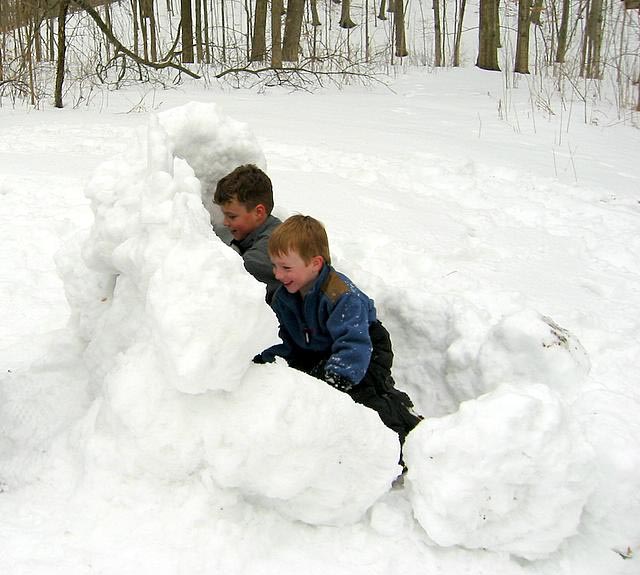
Today I hate snow and the thought of trying to drive around in it. When it snows in New York, people get behind the wheel and slip their brains into the glove compartment before pulling out to terrorize the rest of us. It was so different when I was a kid. The sight of fat, white snowflakes falling on a gray day meant we would soon be building snow forts, sledding down the hills, and having snowball fights while taking cover behind the parked cars. When my mother called me in for lunch, every crevice in my body was filled with melting snow. My lips were blue and I couldn't feel my toes as Mom peeled off the boots, snow pants, soaked gloves, and hat with the ear flaps. I was frozen to the bone and couldn't be happier.

Every once in a while, some unexpected cash would fall into my young life like manna from heaven, in the form of empty soda bottles that rewarded the bearer with a five-cent windfall. These were not easy to find, as people didn't disdain nickels in the Fifties; they took the bottles back themselves. If I came across a large Coke, Seven-Up or Hoffman soda bottle, it was off to the grocery store on Rockaway Avenue where the suspicious owner would always ask: "Did you buy that here". "Yes" I lied easily, desperately wanting that nickel. Then it was off to the candy store (after making a mental note to add the white lie to the "Venial Sin" category for that week's confession.

I was a good student at Our Lady of Lourdes school. I had a gift for memorizing things, which made hitting the books almost unnecessary. I tried to go to school prepared for that day's lessons, but sometimes I spent too much time reading comics or watching TV during the time I should have been doing homework. We all know that sinking feeling of walking into the classroom unprepared, and hoping the teacher doesn't call on us. When this happened to me, and it rarely did, I went on the offensive. When the teacher looked up for someone to answer a question, I would raise my hand and wave it around like mad. I developed this simple strategy after noticing that teachers generally did not call on kids with their hands up. It worked every time. Putting one over on the teacher shouldn't have made me happy, but it did.

Happiness came from trivial things like not getting hit when you knew you deserved it; having your sister take the fall for something you did; finding a great prize in your Cracker Jack box like a magnifying glass that you could turn into a solar death ray to incinerate ants. Seeing that kid in Dunkin Donuts today reminded me that joy is all around us if only we look for it through the eyes of a six-year old.


CLICK ON DATES AT TOP RIGHT TO SEE OTHER "SPALDEEN DREAMS" POSTS.

LOOKING FOR A WORTHY CHARITY? TRY THESE FOLKS:
Children's Craniofacial Association

Saturday, November 7, 2009

John Philip Sousa Comes to Brooklyn

Woody Allen used to tell a joke about being in a marching band when he was in school, and how it was the band's dream to stay together after school and play lounges. It reminded me, as unlikely as it may seem for a poor kid from Brooklyn, of my days as a member of the marching band in Our Lady of Lourdes grammar school back in the 1950s. Looking back, I can't figure out how a school that charged practically nothing for tuition could afford to support a full-blown marching band with instruments, uniforms, and a band manager. I imagine our parents must have kicked in something, but it couldn't have been much since most of them were struggling just to make ends meet.

The band was something to behold. We had a full horn section (bugles, trombones, French horns and tubas, flutes, glockenspiels (a kind of portable xylophone), snare drums, base drums, standard bearers, baton twirlers and a drum major. Our uniforms were blue satin blouses with white trim, white pants with a blue stripe, and white hats (called shakos I believe) with a gold crest. The band manager, whose name I can't recall, was a dapper looking man with a Boston-Blackie moustache. He was married to a stunning blonde who showed up at all practice sessions, which accounted for our band's nearly perfect attendance record.

The band members were drawn from the kids in school, from fifth graders on up. We were asked what instruments we wanted to play, and somehow they taught us enough music to get by. I played what looked like a trumpet, but was actually called a bugle. It had a single valve parallel to the horn bell, unlike the trumpet which has three valves on top. I can still recall the beautiful, shiny horn sitting in its case with the blue velvet lining. We were responsible for maintaining our instruments, and mine always gleamed. I liked the smell of the Noxon metal polish my mother kept in the house for cleaning our imitation silver dinner wear.

We would march in local parades, mostly in Brooklyn. Once in a while we would get a gig out of the area, and all pile in a bus to visit these exotic places. I think we may have also competed against other school bands but I'm fuzzy about that. We had a limited musical repertoire, but all marching band songs sound alike after the first few numbers. We practiced in the school gym, learning not only how to play our instruments, but also how to march in formation...a skill which came in handy later in life during my army days. I can recall playing our blockbuster, a song called "The Thunderer" by John Philip Sousa, a marching band classic. Here it is sounding a lot better than when we played it.
YouTube - The Thunderer March by John Philip Sousa


My music career was pretty remarkable when you think about it. Not so much for my playing ability, which was just fair, but the fact that at a time when money was scarce, my little school somehow found a way to sponsor such a grand enterprise. It is mainly owing to a Catholic school's ability (even to this day) to squeeze three nickles out of a dime, that inner-city kids like me even had a chance to join a marching band. I think to save money, the church paid off our band leader in "plenary indulgences". (For non-Catholics this was a kind of "get out of jail free" card for any stretch you had to do in Purgatory before ascending into Heaven.)


I was a lucky kid. There were many good men and women like our band manager, the teachers who ran our summer day camp, the coaches of all our athletic teams, and the neighborhood librarians who suggested books to read...these good people gave their time for little compensation so that kids could be off the streets and out of trouble. They challenged our bodies and our minds to make us better, and in retrospect, I am so grateful. If it was within my power, I would grant them ALL a plenary indulgence so they could take the Easy Pass lane straight to Heaven.


CLICK ON DATES AT TOP RIGHT TO SEE OTHER "SPALDEEN DREAMS" POSTS.

LOOKING FOR A WORTHY CHARITY? TRY THESE FOLKS:
Children's Craniofacial Association

Wednesday, October 21, 2009

Viva Italia

Reminiscing in this blog about growing up around my Italian family in Brooklyn sparked in me a powerful desire to visit the land of my ancestors. After much planning, and in the company of two special friends, Rich and Joann, my wife Jasmine and I touched down in Rome on October 6, 2009. It was a long, tiring flight since sleep is hard to come by when your knees are up against your chin. The FAA should pass a regulation requiring that, for flights over 4 hours, airlines must provide roomier, more comfortable seats. My ass was asleep until we got to Florence!

Rome was an incredible city, full of energy and bustle, much like New York. The traffic there makes New York look tame by comparison, as tiny cars and scooters zoom down main streets and narrow alleys, trusting to God to keep them from harm. One big difference from New York is that there is no horn honking. Romans simply point their vehicle where they want to go and rely on everyone (including pedestrians since there are relatively few traffic lights) to get out of their way. Rome is a marvel, where antiquities from the days of the Caesars stand, surrounded by a modern city. The Coliseum, the Roman Forum, St. Peter's, the Vatican all co-exist with apartment buildings, restaurants and commuter buses. A side trip to the Tivoli Gardens inspired awe as we tried to imagine how these architectural marvels were conceived, much less constructed over 500 years ago.


Florence is a city of the arts. The main Basilica di Santa Maria del Fiore with its gilded dome and magnificent interior; the Uffizi with gallery after gallery of Renaissance art and sculpture; and the Florence Academy of Art that houses Michaelangelo's David...all seen in too little time on our tour schedule to really appreciate them. We then made another side trip to the storybook town of San Gimignano, a walled, hilltop fortress near Sienna (pictured left) that guarded Florence from her enemies during the feudal wars of the 14th century; then on to the Chianti region in Tuscany where the hillsides are covered with vines, mainly the Sangiovese grapes used in the local wines. Lunch and wine tastings at two wineries made for a most pleasant afternoon.

Venice was our last and, for me, most surprising stop. I had anticipated the beauty and historic significance of Rome and Florence, and my expectations were well met, but I never imagined how beautiful the city of Venice would be. It was like living in a picture postcard, with breathtaking views everywhere one looked. The canals and bridges of the town were much like they must have been centuries ago. St. Mark's Square and church were exciting and alive with tourists, but somehow serene and religious at the same time. The Palazzo Ducale, the residence of the Doge of Venice, was a museum full of art, statuary, period furniture, and a wonderful collection of Medieval weapons.

Our tour guides in every city were knowledgeable and friendly. The residents of each city were warm and many spoke English. Europeans put Americans to shame when it comes to speaking more than one language. I know a little Italian, but each time I spoke to a local in Italian, they assumed I knew the language and their rapid replies left me in the dust. It is impossible to get a bad meal in Italy. We had a funny restaurant experience in Venice. After devouring a platter of Prosciutto and Salami, Joann asked the waiter what the dark red meat was. After checking with the kitchen, he came back and said: "Atsa horse!" "Excuse me" gasped Joann. The waiter repeated: "You know...cavallo...HORSE". I guess whatever nag comes in last at Venezia Downs that day turns up on the menu that night. (P.S. It was delicious.)

Italians are warm, welcoming people with great style. Even the seniors dress with flair and carry themselves with attitude. I felt a kinship with them and was sorry I didn't speak their language better than I did. This visit kind of closed the loop for me. Our grandparents on both sides left southern Italy in the early 1900's to make a better life for their families here in America. By going there and standing on Italian soil as their grandchildren, it felt like an affirmation of their pioneering spirit and work ethic. It was like saying: it's OK Italia, although Pasquale and Caterina Camardi, Nucenzo and Lucia Pantaleno, Vincenzo and Gelsomina Salamo, and Francisco and Matilda Corsano may have left you many years ago, they did well in America, and here are their grateful grandchildren to thank you for their proud Italian heritage. Viva Italia!


CLICK ON DATES AT TOP RIGHT TO SEE OTHER "SPALDEEN DREAMS" POSTS.

LOOKING FOR A WORTHY CHARITY? TRY THESE FOLKS: