Tuesday, April 26, 2011

The Kennedy Years

We've been watching "The Kennedys" on Reelz TV. The series was originally produced for the History Channel, but they declined to air it since they felt the producer was too harsh on the family, especially poppa Joe. They paint him as a controlling, micro-managing fanatic who would stop at nothing to get one of his sons elected President of the United States. It is rumored that, partly because she has a new book coming out on her family, Caroline Kennedy and the rest of the clan exerted pressure on A&E, the parent company of the History Channel, to yank the series because it portrayed her family as manipulating schemers. I found it ironic that in pulling the rug out from under this fine series, the Kennedys acted in exactly the way the producers characterized them in the show.

But I'm not out to bash the Kennedys; they have suffered enough. I really wanted to write about the crises I lived through during the Kennedy administration. I never really thought about it because it just seemed like part of growing up, but President John Kennedy faced some big time challenges in his short time in office. There were many issues facing the country, and it seemed unfair somehow that all would come to a head on JFK's watch. It was the height of the Cold War, with Russia and the United States circling like two Summo wrestlers over who would be the 800 pound gorilla in the world. Racial tensions were tearing the country apart, and the newly liberated island of Cuba, just 90 miles off our coast, was cozying up to the Russians. It seemed as if real life was playing out like in the movies Dr. Strangelove and Seven Days in May.

First. there was the crisis in Berlin. In November 1958, Soviet Premier Nikita Kruschev issued an ultimatum giving the Western powers six months to agree to withdraw from Berlin and make it a free, demilitarized city. Kruschev and Eisenhower talked but no agreement was reached. In 1961, alarmed by the steady flow of citizens from to East to West Berlin, the border to West Berlin was closed and the Berlin Wall erected. President Kennedy responded by calling up nearly 150,000 National Guardsmen. My Army reserve was on alert but never activated. My pal Lefty from Hull Street was called up with his reserve unit and spent a year in North Carolina making Raleigh safe for Democracy. The Berlin Wall stood until the great Ronald Wilson Reagan made his famous: "Mr. Gorbachev, tear down this wall" speech in 1987.

Most southern states had "separate but equal" rules for whites and blacks in the early sixties for schools and other public facilities. A black student named James Meredith, who had attended an all black junior college for two years, applied in 1960 to get a degree at the University of Mississippi. He was denied entry twice, with the leading opponent being the state governor, Ross Barnett. After winning a case brought on his behalf by the NAACP, Meredith thought the matter had been settled. But Governor Barnett, despite telling President Kennedy and his brother Attorney General Robert Kennedy that he would stand aside, broke his word and incited the locals to riot, resulting in injuries and death. The Kennedys, infuriated at the betrayal, called in the National Guard who led Meredith through the university's door. This was a shameful incident in American history, and JFK, despite knowing he would lose Southern reelection votes, ultimately did the right thing.

With hardly time to catch his breath, Kennedy was up at bat again. In September 1962, after some unsuccessful operations by the U.S. to overthrow the Cuban regime (Bay of Pigs) the Cuban and Soviet governments began to surreptitiously build bases in Cuba for a number of medium-range and intermediate-range ballistic nuclear missiles with the ability to strike most of the continental United States. On October 14, 1962, a United States Air Force U-2 plane on a photoreconnaissance mission captured photographic proof of Soviet missile bases under construction in Cuba. The U.S. announced that it would not permit offensive weapons to be delivered to Cuba and demanded that the Soviets dismantle the missile bases already under construction or completed in Cuba and remove all offensive weapons. Cuba and the Soviets backed down after the United States agreed never to invade Cuba.

I voted for JFK when I was young and foolish, and a registered Democrat. I was greatly saddned when he was killed in 1963. Although history may have taken some of the bloom off the Camelot legend by revealing JFK's human frailties, I think he did a credible job in dealing with all the world-shaking crises he faced in so short a time. I have also gained a measure of respect for his brother Bobby. It was his job to play bad cop to JFK's good cop. Bobby was the hammer in JFK's velvet glove. Together they bullied and cajoled the Congress and the Cabinet, with able assistance from one of the world's greatest political persuaders, Lyndon Baines Johnson. I don't know how anyone stands up to the pressure of being the leader of the free world. I don't envy them their job of running this country, and though I often violently disagree with their policies, I applaud them for having the courage to try.


CLICK ON DATES AT TOP RIGHT TO SEE OTHER “SPALDEEN DREAMS” POSTS. ALSO, READ MY OTHER BLOG: BRAINDROPS

LOOKING FOR A WORTHY CHARITY? TRY THESE FOLKS:
Children's Craniofacial Association 


Monday, April 18, 2011

Brooklyn's Champs-Élysées

A while back I wrote about Atlantic Avenue, one of the neighborhood streets that holds a lot of memories for me. Another is the majestic Eastern Parkway, a broad, tree-lined boulevard that starts around Bushwick Avenue and winds its way through a tangle of ethnic neighborhoods before ending at the Grand Army Plaza entrance to Prospect Park. When I was growing up in the Fifties, a drive along Eastern Parkway was our answer to a stroll along the Champs-Élysées in Paris. The multi-laned street carried traffic from downtown Brooklyn to the Interboro (now called Jackie Robinson) Parkway, and along Atlantic Avenue onto the Belt and Southern State Parkways to the promised land, Long Island.

Eastern Parkway was the world's first six-lane highway, completed in 1874. It had divider islands that separated the main traffic lanes from the local streets. These were planted with beautiful trees and paved with grey stones, and we stood on them waiting for the light to change. For a kid, crossing Eastern Parkway was a big deal, and our parents would have had fits if they knew we were so bold as to try. Brownstone houses, apartment buildings, retail shops and storefront churches lined both sides of the street. In my time, Jews were the primary residents of the area with a scattering of Blacks. A few Orthodox Jews still stubbornly hang on in the Crown Heights section, and an uneasy peace exists between them and the Blacks, who are now the dominant culture.

I spent a good part of my 'yout' just off Eastern Parkway in Callahan and Kelly Park on Truxton Street. We walked from home and sometimes stopped off at the candy store to pick up a new Spaldeen ball, or maybe a bat from the broom factory where they sold thick, red or blue broom handles for fifteen cents. These made perfect stickball bats. We played at the handball courts, where an outline of home plate was painted the height of the strike zone. This was a good variation on street stickball because it only required two kids, a pitcher and a hitter. The area was enclosed by a chain-link fence, and depending where the batted ball hit the fence, it would be a single, double, triple or home run.

Heading along Eastern Parkway toward downtown Brooklyn, we'd pass the live chicken market. I always held my breath to avoid a choking smell that still lingers in my nightmares. There was a junk yard fronted by a run-down store window decorated with hub caps. They sold used car parts...remember this was in the day when people actually repaired their own cars. If you zigged off Eastern Parkway near Carlucci's restaurant where we ate after attending funerals, you could visit Our Lady of Loreto Church on Pacific and Sackman Streets, where I was baptized. There was Miranda's Beer Distributor where my father bought cases of Rhiengold and Piels beer for family celebrations. Farther down was the Eastern Parkway Arena where prize fights were held on Friday nights, and at other times it was used as a roller skating rink.

There were a number of nightclubs along Eastern Parkway, including one whose name escapes me, across from the Brooklyn Botanical Garden. This club was patronized mostly by Blacks, and featured top-name entertainment. I went there a couple of times and, while I felt nervous being one of the few white guys at the bar, it was worth it to see acts like the Platters on stage. There was also a small Cabaret whose claim to fame was a real piano mounted on the roof above the doorway. This fascinated me and I went out of my way to look for it every time we drove by. Eastern Parkway ended at the Grand Army Plaza circle near the Brooklyn Museum and the main branch of the Brooklyn Public Library. We just visited a Norman Rockwell exhibit at the Museum last week. Going back there is like time-traveling and somehow makes me feel young again.

I came across a website NewYork/BrooklynOld.htm that contains so many pictures of places in Brooklyn  that, unlike the Brooklyn Museum, are long gone. It gave me such pleasure to look at them because it's who I am. One of the nicest associations I have of the area is from a street that begins where Eastern Parkway ends...Union Street. It was there that a special girl with a small gap in her front teeth grew up at 909 Union Street. Before we were married I 'd drive along Eastern Parkway to pick her up for our dates. When we returned, her father was waiting at the second story window to be sure we didn't linger too long over our goodnights. Thank you Eastern Parkway for Callahan-Kelly Park, the skating rink, the piano on the roof, and for the best friend I have in the world.


CLICK ON DATES AT TOP RIGHT TO SEE OTHER “SPALDEEN DREAMS” POSTS. ALSO, READ MY OTHER BLOG:  BRAINDROPS


LOOKING FOR A WORTHY CHARITY? TRY THESE FOLKS:
Children's Craniofacial Association


Tuesday, April 12, 2011

The Rear View Mirror

In the car today on the oldies station I heard Elvis Presley singing Hard Headed Woman. Suddenly I saw in my mind those wavy black and white lines they always used on old television shows to signal that a flashback was coming.

I'm playing a short center field the way I always did, daring opposing batters to hit it over my head. I'm twelve years old and, in my mind at least, there is no fly ball I can't run down. At the crack of the bat I instinctively take off in the direction I know the ball will be traveling. After a few long strides, without slowing down, I sneak a look over my shoulder to try to pick up the ball's flight. There it is, soaring toward the fence. I adjust my direction slightly and stick up my glove. I hear the thwack as it hits the webbing. I spin and throw hard on a line to third base. The runner who was going to tag up at second goes half-way to third and goes back. He gives me a grudging 'nice catch' nod as I trot back to my position. I'm good. My body is strong, my reflexes are quick, and I have that unshakable confidence unique to the young.

"Well a hard headed woman, a soft hearted man, been the cause of trouble ever since the world began, oh yeah...." is blaring out of the radio of my 1961 Chevy Impala. Heads turn because the car windows are rolled all the way down as I cruise along Cross Bay Boulevard past the Big Bow Wow Drive-In. I can smell the burgers and hot dogs on the summer breeze as I pull into the lot. I look good in my French-toe shoes, black chinos with the belt in back, and my pink and black shirt that laces-up the front. I take an admiring glance at myself in the gleaming finish of the black car before strolling to the miniature golf course to see if any of the guys are there. I wonder how any of the giggling girls, with their hair in giant rollers under bright aqua scarfs can resist me. I have that unshakable confidence unique to the young.

"Now Adam told Eve, listen here to me, don't you let me catch you messin' round that apple tree, oh yeah..." I couldn't wait to get out of high school; college was definitely not for me. I'm in a dead-end job working as a bank clerk and thinking I have the world on a string. I'm pulling in a sweet $52 a week and spending twice that. The free checking account that the bank gives to every employee is my ticket to living beyond my means. Some of the bad checks I wrote are still out there bouncing. I soon discover credit cards and my finances worsen. As Tennessee Ernie said: Another day older and deeper in debt. My prospects are poor, but I'm having too much fun to realize it. I have that unshakable confidence unique to young.

"Now Samson told Delilah loud and clear, Keep your cotton pickin' fingers out my curly hair, oh yeah..." My best friend Rich has a girl he wants me to meet. She's a friend of his girlfriend JoAnn. Her name is Jasmine, she and JoAnn are classmates at Bishop McDonnell High School on Eastern Parkway in Brooklyn. We meet at JoAnn's house in Richmond Hill. Jasmine seems nice enough and we hit it off pretty well. I am especially impressed with her sense of humor; she laughs at all my jokes. I think we went to a movie and after that had a few dates, but we went our separate ways. Hey, why rush into anything, there are plenty of girls out there and most of them would be happy to date a guy like me. I have that unshakable confidence unique to the young.

"I got a woman, a head like a rock. If she ever went away I'd cry around the clock, oh yeah..." As the light changes and the guy behind me honks, I drift back to reality. I reflect on the ending to my story. It must have been divine intervention that brought me to my senses, and sent me back to the lovely Jasmine. Luckily she saw something in me that even I didn't know was there. She married me, and began the process of turning me into a better man. She sacrificed so that I could finish college at night, get a better job, and make a life for our family. I wanted so much to justify her faith in me.

Whatever I've accomplished in life, I owe to her. Even when I make mistakes she is always there to help me. The only way I can think of to repay her is by trying harder to be the kind of husband she deserves.

CLICK ON DATES AT TOP RIGHT TO SEE OTHER “SPALDEEN DREAMS” POSTS. ALSO, READ MY OTHER BLOG: BRAINDROPS


LOOKING FOR A WORTHY CHARITY? TRY THESE FOLKS: Children's Craniofacial Association


Monday, April 4, 2011

What the Hell is a Gerund?

I recently started teaching a 3-day letter writing class for employees of my old company. These folks are senior customer service reps who must compose written replies to the more complicated inquiries and complaints the company receives, and also to letters written to the Public Service Commission or top executives. I knew going in that it would not be an easy class; if you haven't mastered the basics of grammar, punctuation, capitalization, sentence structure, etc. by the eighth grade, then that ship has sailed. My experience bore out my fears...luckily the company has hundreds of "canned" letters written for almost every imaginable occasion that its employees can use as is or modify slightly as necessary. This limits the amount of original writing they must do.

Going over the rules of grammar took me back to my school days at Our Lady of Lourdes in Brooklyn. Those teachers and Franciscan Brothers drilled us relentlessly from the first grade, and created a solid foundation in the English language that they continued to build on right on up through eighth grade. Starting at ground zero with the alphabet, there were printed white-on-green signs mounted above the blackboard that ran around the perimeter of the room. They contained examples of how to write every letter in upper and lower case script.

We learned the Palmer Method of script writing by doing exercises in making loops and whorls with our scratchy fountain pens, while the teachers stood over our shoulders. By pure, boring repetition we learned how to write out letters in a legible hand by the end of first grade. Today, teaching script writing to kids has become a major issue in grammar schools. "Helicopter Parents", so called because they hover over their children every moment of every day, are up in arms because little Ashley made a scowly face when she tried to write in script. Call out the guard, change the curriculum, my child is struggling and I can't bear to watch! Some pinhead actually wrote a book called: "Handwriting Without Tears". Puh-leeeeze.

By second grade we learned about capitalization, punctuation, and spelling. In third grade we hit the basic parts of speech: nouns, verbs, adjectives. Then we moved on to prepositions, conjunctions, adverbs, infinitives, and gerunds... gerunds, for God's sake. If you asked the average high school graduate what a gerund was, they would probably answer: a small, furry animal that lives in a cage and exercises on a wheel. We not only learned the parts of speech, but how to correctly use them in sentences. By third grade we were diagramming sentences showing their proper construction, the subject, verb, object and all modifiers. This was a foolproof way to learn grammar, but they don't teach it any more because it causes the kiddies to frown.

We took all the English we learned and we wrote. Essays, book reports, friendly letters, business letters...we had homework every night that involved writing out the answers to questions. Our answers had to be not only factually correct, but written logically, using correct spelling, grammar, and sentence structure. I'd bet money that in 1956, the English and writing skills we had after graduating eighth grade in a Catholic grammar school would surpass those of college grads today. Don't take that bet because you'd lose. One of the greatest deficiencies exhibited by modern day job seekers is the inability to write. It's a very sad legacy for young American adults that they can't write nearly as well as mid-Nineteenth Century kids with a fourth grade education.

So thank you Misses Langin, Ruffalo, Wall and Baumann; thank you Brothers Conrad, Francis, and Jude for beating that stuff into our young skulls. We didn't appreciate it then, but you were bestowing on us the priceless gift of literacy. Today we worry more about our kids being happy and having high self-esteem...those things are good up to a point, but can't help them find work if they are illiterate morons.


CLICK ON DATES AT TOP RIGHT TO SEE OTHER “SPALDEEN DREAMS” POSTS. ALSO, READ MY OTHER BLOG: BRAINDROPS


LOOKING FOR A WORTHY CHARITY? TRY THESE FOLKS: Children's Craniofacial Association


Monday, March 28, 2011

Waste Not, Want Not

I like my coffee in a cardboard container instead of a cup. I guess it was all those years of going to the coffee cart at work and drinking coffee out of a container that created this odd habit. When I go to Dunkin Donuts or Starbucks for a coffee to take home, I like to rinse out the container and re-use it once or twice before throwing it away. This not only allows me to drink coffee I brew at home out of a cardboard container, but also gives me a chance to re-use something that is still perfectly usable before throwing it away. My youngest son was recently startled to find that I did this. He wonders why I just don't buy a package of cardboard containers and use a new one when I have coffee at home.

Where am I going with this? Well, I want you (and him) to understand where this habit of thrift developed. I don't think of myself as cheap. The smoke coming off my American Express card should be proof of that. Also, thanks to my wife's love affair with Costco, I have a closet full of cardboard containers, and can well afford to use a new one every time I want a cup of coffee. Its just that my upbringing won't let me. I remember as a kid, nothing in our house was wasted. That wasn't just a quirky habit, that arose from need. My parents could not afford even small extravagances, and never owned a credit card, so the money my father brought home each week had to pay all our expenses. As a result, my mother found ingenious ways to stretch a dollar.

We ate a lot of dinners made with some kind of pasta cooked with other simple ingredients like beans, lentils, peas, escarole and potatoes. (By the way, please don't feel sorry for us...I still enjoy these delicious and nutritious 'paisano' dishes today.) Our dinner glasses were provided courtesy of Welch's Jelly, and our dinnerware was supplemented with china handed out at the local movie house to boost attendance. We couldn't afford soda, so Mom bought little cans of flavored syrup made by Snowcrop. One can of this sugary stuff made two quarts of imitation soda, and started lots of cavities in our unsuspecting teeth. Tupperware was out of our reach, but every empty ricotta container found its way into the cupboard to be reused for storing leftovers. Balls of bakery string, used rubber bands, and pieces of used aluminum foil were in the "junk" drawer for when they were needed.

A lot of our clothes came from Cousins Hand-Me Downs, Inc. That's not a store, but a way for poor families to recycle clothes as the older kids outgrew them. I'd go to a birthday party and see my cousin Sal wearing a favorite old shirt of mine. When crew neck sweaters came into style, I just took my v-neck vest and wore it backwards under my jacket. School lunches came from home...there were no school cafeterias with healthy menus served by ladies in hair nets. Our brown bags dripped oil and reeked of Italian tuna fish, peppers and eggs, potatoes and eggs, onions and eggs, or on a good day, a veal cutlet hero. Spending money came from picking up empty soda bottles and taking them to the candy store, where we always had to argue with the proprietor to convince him we had bought the bottles there before he would cash them in.

I remember my Dad straightening out nails that had bent when he tried to pound them in. He put the straightened nails into his "toolbox", really an old shoebox, to be used again. Mom collected Green Stamps which were given out by certain participating merchants and pasted into books. Books of stamps could be redeemed for nifty items like toasters and beach chairs. The Green Stamp redemption center was on Pitkin Avenue, and I remember how excited Mom would get when we walked down there to get some simple household item she could otherwise not afford. Televisions had vacuum tubes, and when a TV set went "on the fritz" we would go to Louie's candy store where a TV tube testing machine was set up. You pulled the tube out of your television that you thought was burned out and plugged it into the tube tester. If the needle on the machine went into the red zone, it meant the tube had to be replaced. Louie sold replacement tubes and for a couple of bucks, you were back watching Howdy Doody again.


As much as this sounds like a chapter out of Charles Dickens, this is how we were raised. Appliances were fixed, socks were darned, shoes were resoled, and nothing went into the garbage until all the useful life had been squeezed out of it. And so my son, there you have it, the reason your old man re-uses his coffee cups. Mom would have been so proud.


CLICK ON DATES AT TOP RIGHT TO SEE OTHER “SPALDEEN DREAMS” POSTS. ALSO, READ MY OTHER BLOG: BRAINDROPS

LOOKING FOR A WORTHY CHARITY? TRY THESE FOLKS: Children's Craniofacial Association

Tuesday, March 8, 2011

Atlantic Avenue

It starts down near the docks in Brooklyn and snakes its way eastward through preppy Clinton Hill, Downtown Brooklyn, Bed Stuy, East New York (keep your car doors locked for those last two stretches), Woodhaven, and finally stops abruptly at the dreaded Van Wyck Expressway in Ozone Park, Queens, where traffic goes to die. I'm talking of course about the street that is so bound up with my youth...Atlantic Avenue. Back in the day, before shopping malls began sprouting everywhere, people flocked to neighborhood stores strung out along Brooklyn boulevards like Atlantic Avenue, Rockaway Avenue, Fulton Street, and further down, Pitkin Avenue, and Sutter Avenue, the latter two streets referred to casually by the locals as "Jewtown".

Shopping density along Atlantic Avenue waxed and waned, with the heaviest concentration of "name" stores in Downtown Brooklyn, and clusters of local stores strung out all the way to Queens. Back in the 1950s, cars were not as plentiful as they are today, and one of the reasons Atlantic Avenue thrived was great public transportation, All of the city's subway lines had stops along Atlantic Avenue, and many bus lines brought shoppers from outlying areas to spend their money. There was even a Long Island Railroad stop (East New York station) that has since been abandoned and closed down . Back then, the train would leave the gloomy East New York station, re-enter the tunnel under Atlantic Avenue and continue east in practically a straight shot to Jamaica. There was even a trolley that ran along Rockaway Avenue where you could transfer at Atlantic Avenue for eastbound or westbound buses.

There were many prominent landmarks along Atlantic Avenue like the distinctive red brick building known as The 23rd Regiment Armory, at 1322 Bedford Avenue, that was built from 1891-1895 and takes up most of the square block bounded by Atlantic Avenue, Pacific Street, Franklin and Bedford Avenues. The regiment was organized during the Civil War and was housed in a nearby armory on Clermont Avenue from 1873-1895. Another is the Williamsburgh Savings Bank, which stands at the crossroads of Flatbush Avenue and Atlantic Avenues in Fort Greene, where it rises majestically into the Brooklyn sky. At 512 feet, the building's tower is the tallest structure in the borough, and its gilded copper dome and clock have been a familiar sight to Brooklyn residents since 1929.

There was also a mysterious building complex called the House of the Good Shepherd, just off Atlantic Avenue at Hopkinson and Pacific. The Home, whose stated objective was "the reformation of women and the preservation of young girls", became the standard repository for women mostly in trouble with the law. In those days that could include disobeying a husband, drunkeness, failure to pay a debt, etc. It was also a home for wayward girls. The Sisters of the Good Shepherd, who ran the home, did an excellent job of keeping the girls protected by building a ten foot high brick wall topped with barbed wire around the complex. Altar boys from the local churches were recruited to help say Mass in the home, and the tales of wild doings behind those walls ran around the neighborhood like wildfire.

Around Atlantic and Flatbush Avenues stood Bickford's Restaurant, a popular spot that stayed open late and was a favorite stop after a movie date Downtown at the Fox or Albee Theaters. Another restaurant we hung out in was the White Castle on Atlantic Avenue and Highland Place. This was the scene of our infamous arrest for murder as told in an earlier post: View "The Lords of Flatbush". In Queens, further out on Atlantic Avenue, was a joint called Maybe's that served burgers in plastic baskets covered in a mountain of french fries. And of course anytime a birthday rolled around, we would head to a bakery on Atlantic and Vermont called Mrs. Maxwell's. The old owners would decorate cakes in the window so people could watch. It's still at the same location but under new management. I have souvenir plaque in my arteries as a grim reminder of Mrs. Maxwell's.

As you drive along Atlantic Avenue today, there are remnants of the old street, but it has changed greatly. You can still see the Williamsburg Savings Bank tower, but I believe it has been converted to condos. The Armory is still there looking much like it did in the 1950s, but its really not safe to walk there any more. The House of the Good Shepherd is a housing project. In the past five years, Atlantic Avenue has undergone a renaissance, with big box stores like Target and Best Buy coming into the old downtown area. There is also the Atlantic Yards project, under which, after much misguided resistance on the part of local residents, the new Barclay's Center Arena and shopping complex will be constructed. It will serve as the new home for the New York Nets basketball team, and will revitalize an area that had fallen on very hard times.

If I close my eyes and think back, I can picture the walk from my old street corner down Rockaway Avenue to Atlantic Avenue. I would pass Louie's Candy Store, the cigar stand under the el at Fulton Street, Crachi's Drug Store presided over by my godfather Gabriel, my grandfather's hat blocking shop, and across the street, Ariola's Pastry, a neighborhood treasure where they made the best sfogliatelle pastries in the world. This link will give you a virtual tour of the Atlantic Avenue I knew. http://www.forgotten-ny.com/STREET%20SCENES/atlantic/atlantic.html


CLICK ON DATES AT TOP RIGHT TO SEE OTHER “SPALDEEN DREAMS” POSTS. ALSO, READ MY OTHER BLOG: BRAINDROPS


LOOKING FOR A WORTHY CHARITY? TRY THESE FOLKS:
Children's
Craniofacial Association

Monday, February 21, 2011

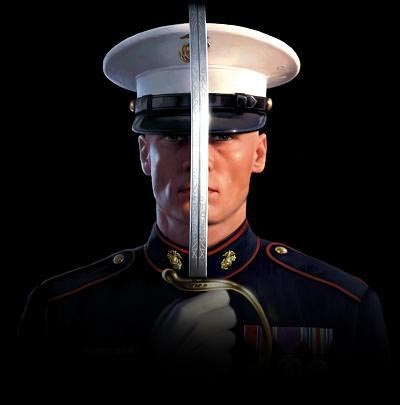
The Halls of Montezuma

The "Marine Hymn" is the official hymn of the United States Marine Corps and the oldest fight song in the U.S. military. The opening bars of the hymn include the phrase: 'Halls of Montezuma', which refers to the Battle of Chapultepec during the Mexican-American War, where a force of Marines stormed Chapultepec Castle. Why the history lesson? Well as a kid, the phrase had a different meaning for me because of my Brooklyn frame of reference. I remember thinking that wherever Montezuma was, it must have been one hell of an apartment building if they wrote an entire song just about the halls.

Apartment buildings dotted Brooklyn neighborhoods like our own little Chapultepec Castles. They were interspersed with residential row houses, now called by the fancier term 'brownstones' since real estate prices went up. These 4-6 story structures ranged from funky functional to surprisingly elegant, and housed the huddled masses that flocked to places like Brooklyn during the immigration wave of the early twentieth century. Each building had several apartments on a floor, and tenants in adjoining units got to know each other a lot better than they cared to. The lobbies always smelled of cabbage, a testament to the culinary tastes of the residents.

Hallways of apartment buildings were used for a surprising number of activities. On rainy days there was usually a bunch of kids sitting on the marble entrance steps playing Brisk, a card game imported from Italy. We learned some of the finer points of the game from the old Italian men who played on the park benches on sunny days, like how to silently communicate with your partner. This was a form of cheating to be sure, but a vital advantage in a game where knowing your partner's hand gave you a decided advantage. Sometimes the older neighborhood guys would get up a crap game under the stairs that let to the basement. If the games got loud or vulgar, the building super would usually chase us out into the street.

Many a Brooklyn kid had his first cigarette in the back hallway of an apartment building. We didn't dare risk being seen smoking in the street since we knew the neighborhood women would send silent messages on their 'jungle drums' over the rooftops and back to our parents, and we would pay dearly for our folly. We would snitch unfiltered cigarettes like Luckies, Chesterfields or Camels from the packs in our fathers' pockets and light up like big shots. Those were the days when smoking was in vogue, and 'inhaling' was a rite of passage. Incredibly, actors, sports figures, and even doctors promoted the relaxing benefits of cigarettes.

Another more romantic activity was stealing your first kiss. If you lived in a private row house, there was always a watchful parent at the window, waiting for you, a worthless hoodlum in their eyes, to bring their daughters home from a date. This was definitely a mood killer. If you were lucky enough to be dating a girl who lived in an apartment building, you had more leeway since the entrance wasn't always visible from her apartment. You planned your move carefully, always carrying a pack of Juicy Fruit gum to cover up the smell of Chesterfields on your breath. At the right moment you moved in, trying to anticipate which way she might angle her head to avoid the awkward 'nose bump'. You also prayed that some nosy neighbor wouldn't be taking the dog for a walk during your big 'Tyrone Power' moment.

Over the years, New York City took the idea of the apartment building in a horribly wrong direction when it started constructing 'housing projects', huge complexes with hundreds of dwelling units. Adopting the 'bigger is better' theory, they moved from small buildings where everybody knew and looked out for their neighbors to over sized, impersonal brick monstrosities that became breeding grounds for crime and helped to doom so many city neighborhoods. (By the way, I must confess that I didn't really think that the Halls of Montezuma were in an apartment building, but it did provide a nifty title for this blog.)

CLICK ON DATES AT TOP RIGHT TO SEE OTHER “SPALDEEN DREAMS” POSTS. ALSO, READ MY OTHER BLOG: BRAINDROPS


LOOKING FOR A WORTHY CHARITY? TRY THESE FOLKS:
Children's Craniofacial Association


Sunday, February 6, 2011

Go Deep, Dago

Gone are the days when kids just went out the door and played. The world is a different place than it was in Brooklyn in the fifties. Creeps hunt children on the streets even in the best of neighborhoods. Parents have become so protective of their kids that they monitor their every move. "OK, we have a play date with Tommy at 3:15 this afternoon. I'll drive you to his house, walk you to the door, and pick you up at exactly 5:30. Make sure to call me on your cell phone every half hour to let me know you're OK." Maybe an exaggeration, but only a slight one.

We had so much more freedom as kids. Mom (who was still home to look after us and not working two jobs so the family could drive a BMW) would send us out after school to play; when we saw our fathers coming home from work we knew it was time to go home. On non-school days we were on the street by 8 am and played until the lamppost came on. Maybe we would rush in at noon for a hurried peanut butter and jelly sandwich, but then it was back out on the street. Having so much time for ourselves we invented games to play. I have described some of these in past posts so I won't repeat myself. Suffice to say that we were rarely bored.

Just as there is a caste system in India, there were class divisions among street kids. Though we sported no colored dots on our foreheads to mark our status, there was a definite, unspoken pecking order.Every few years you moved up with your age mates to another league so to speak. At the park you got to play on the better ball fields. You were picked earlier when sides were chosen for a game. There was some overlap in the groups based pretty much on your ability, for instance, a 12-year old kid with talent sometimes got invited to play with the 15-year olds and was given a chance to prove himself. If he delivered he became a regular part of the older group's player pool. This was quite a feat in our kid universe...like jumping from AA ball straight to the majors.

Maybe the biggest leap came when you were invited to play with the "men"... groups in their 20s, 30s, and 40s. In Brooklyn, you didn't stop playing ball just because you were out of your teens. Anyone who grew up on the streets will remember married men out in the street playing stickball in their pizza-man undershirts. One of the defining moments of my youth came from making the most of such a rare opportunity. One cold day we tagged along with the men on the block to Highland Park where they held regular touch football games. They tolerated us just so they had someone to run for sodas and cigarettes after the game.

We usually hung out on the sidelines watching the men, all pretty good athletes, go at each other. During the game a guy named Anthony DiBiase (called Dukie because everybody had a nickname) went down with a twisted ankle. The quarterback on one of the teams, an Italian-hating Irish cop named Eddie Braden, pointed to me and said: "Hey kid, fill in for Dukie." It wasn't a question but a command. I was around 15 at the time and pitted against bigger guys who were not above throwing a forearm into your puss before they "touched" you to stop the play.

I was on fire that day. Being much smaller and faster, it was easy to get open. Eddie kept finding me on short passes, long passes, any ball he threw up I pulled in. After the game, which we won handily, Eddie called me over and said in front of the men: "This kid has the best hands of any little dago I ever played with." He signalled for one of my friends to come over and ordered him to go buy sodas for the both of us. I felt ten feet tall at that moment; lower caste kids rarely got praise from the Alpha dog. I was proud not just for myself, but for struggling little dagos everywhere.


CLICK ON DATES AT TOP RIGHT TO SEE OTHER “SPALDEEN DREAMS” POSTS. ALSO, READ MY OTHER BLOG: BRAINDROPS


LOOKING FOR A WORTHY CHARITY? TRY THESE FOLKS: Children's Craniofacial Association

Thursday, February 3, 2011

Saved by the Books

I have written in an earlier post about my local Public Library branch on Saratoga Avenue and Macon Street in Brooklyn (View "At the "Liberry"). When I think about how people's reading habits have changed today, I'm reminded of what an important part this old building played in my life when I was young. Before there were electronic Kindles, Nooks and i-Books, there were neighborhood libraries with dusty shelves, shushing librarians, and the most wonderful array of books any boy could hope for. Those books had some years on them, and gave off a pleasantly musty smell that is missing from modern-day libraries.

My local library branch in Staten Island features lots of computers, books on CDs, and online books you can download to your MP-3 player, but has very few actual books on its shelves. Where are the card catalogs in the wooden drawers that held the keys to adventure, romance, literature, history and biographies? What happened to the quiet place I remember where people whispered out of respect to those who were reading or studying? My library has turned into a noise-filled place where people feel free to eat, drink, and converse in loud voices using the worst street language, while indifferent librarians go about their business as if it was none of their affair.

Honestly, as a kid, I could have gone either way. My Catholic school education pulled me toward the angels, but the influence of our rough and tumble neighborhood tried to nudge me in the other direction. I led a sort of double life, trying my best to excel in the classroom because I honestly loved learning, while at the same time maintaining my street creds by running with the guys and doing some stupid things I now regret. Among the most positive influences for good in my conflicted young life were my parents and teachers of course, but right after them I would rank the local library and the doors it opened for me.

I almost had to sneak down there for fear someone would find out and put out the word that I was a "bookworm", the worst thing one Brooklyn kid could call another. My parents were not readers so there were very few books in our house. I think the grade readers we read aloud in school were the first books to excite my curiosity. In the upper grades we were assigned book reports on classics like The Red Badge of Courage and Tom Sawyer. A lot of kids took the "Classic Comics" shortcut, but I pored over these books from cover to cover marveling at how the authors could spin such compelling tales. Soon I began to read for fun, a habit that stayed with me, and which inspired a love affair with words that continues to this day.

I'm a little sad that the library I knew as a boy is pretty much gone. Probably fifty years from now, today's kids will be moaning about how they miss their electronic books and laptop computers. By then publishers will be downloading books right to the chip imbedded in the brains of all newborns. You'll just have to think about what book you want to read, and presto, the software in your head will disgorge it. I understand that you can't stop progress, hell even I enjoy listening to books on CD in my car, but I think back to that building on Saratoga Avenue, and see myself sitting there in my black leather jacket and motorcycle boots engrossed in a book about a boy my age; I see the Civil War through his eyes and try to imagine what it must have been like. Maybe that magical sense of wonder only happens for the young.


CLICK ON DATES AT TOP RIGHT TO SEE OTHER “SPALDEEN DREAMS” POSTS. ALSO, READ MY OTHER BLOG: BRAINDROPS

LOOKING FOR A WORTHY CHARITY? TRY THESE FOLKS: Children's Craniofacial Association